Ingredients
Equipment
Method
- Crack the eggs into a small mixing bowl and whisk thoroughly until the yolks and whites are just combined, creating a frothy, uniform mixture.
- Add a pinch of salt to the eggs and whisk again to incorporate. This early seasoning helps with emulsification and flavor.
- Place your non-stick skillet over very low heat, approximately 90°C / 200°F. Add the butter and let it melt gently, swirling the pan to coat the surface evenly. The butter should shimmer with a faint nutty aroma.
- Pour the whisked eggs into the warm pan. You should hear a gentle crackle as they hit the butter—this indicates the right temperature for slow cooking.
- Start stirring immediately with a silicone spatula, pushing the eggs from the edges toward the center in slow, gentle motions. Keep the heat low to allow an even, silky curd to form.
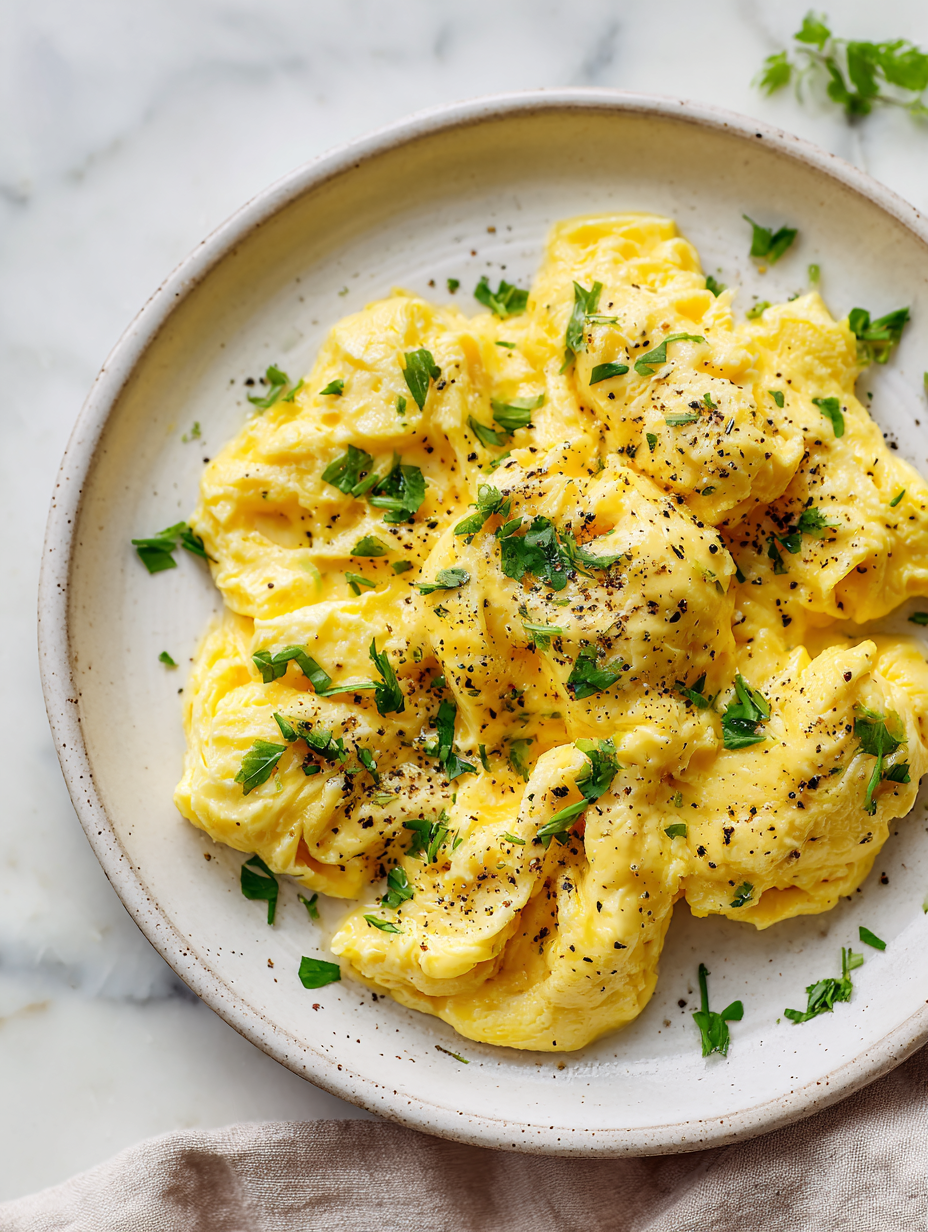
- Continue gently stirring, watching as the eggs slowly thicken and form soft, glossy curds. This process takes about 2-3 minutes. Be patient; the key is gentle heat and persistent stirring.
- If using, swirl in a teaspoon of heavy cream now, folding it gently into the eggs for extra richness and a velvety appearance. Remove the pan from heat once the eggs are just softly set but still moist and glossy.
- Give the eggs a final gentle stir, then taste and add pepper or additional seasoning if desired. Serve immediately for the best creamy texture.
Notes
Use very low heat and patience to achieve the best silky, custardy scrambled eggs. Stir constantly for tender curds, and remove from heat just as they reach the desired consistency.