
There’s something satisfying about turning a tough cut of pork into something soft and comforting without much fuss. This crockpot pork stew is my go-to on busy days when I want dinner to do most of the work itself. The slow cooker turns the pork shoulder into tender bites that practically melt on your tongue, filling the house with a smoky, savory aroma that gets everyone talking before the first spoonful.
What I love most is how this recipe captures the essence of slow cooking—long enough to deepen flavors and break down connective tissue, but flexible enough to suit the chaos of a hectic week. It’s a humble dish that feels like a warm embrace, perfect for chilly evenings or when I need a bit of homey comfort. Plus, it’s a recipe that reminds me: sometimes, the simplest ingredients, when cooked right, become something truly special.
This recipe focuses on how slow cooking transforms humble pork shoulder into a tender, melt-in-your-mouth stew that tastes like it’s been simmering all day, even if you only let it cook for a few hours.
The story behind this recipe
- This recipe started as a way to use up a leftover pork roast from a Sunday dinner. I found that slow cooking it again with fresh vegetables and herbs turned it into a completely new dish—something hearty, warm, and unexpectedly comforting. It’s funny how leftovers can spark new ideas, especially when you’re short on time but still crave something soul-satisfying.
- Once, I was battling a cold, and this stew was the only thing that made me feel like I was getting a hug in a bowl. The smell alone—rich, smoky, and a little tangy—had everyone drifting into the kitchen, hoping for a taste. It’s become a staple not just because it’s easy, but because it’s a dish that feels like a small victory after a long day.
- heading
- story_type
Ingredient breakdown: key components
- Pork shoulder: I prefer it for its marbling and rich flavor. If you want leaner, try pork loin, but it won’t be as tender.
- Carrots: I like them chunky; they add a natural sweetness and hold up well during slow cooking. Thin slices soften too much.
- Onions: I use yellow for sweetness, but red adds a hint of sharpness if you like a punch of flavor in each bite.
- Stock: Beef or chicken broth works, but I love using a smoky, homemade broth when I have it. It really deepens the stew’s aroma.
- Herbs: Thyme and bay leaves are my go-to, but fresh rosemary can add a lovely piney note if you’re feeling bold.
- Tomatoes: Canned crushed tomatoes give a subtle acidity and richness. Skip if you prefer a more gravy-like consistency.
- Potatoes: Yukon Golds are my favorite—they stay creamy. Russets can break down into mash, so handle with care if you want texture.
Spotlight on key ingredients
Pork shoulder:
- I love its marbling and rich flavor; it transforms into melt-in-your-mouth tenderness after slow cooking.
- It behaves beautifully during simmering, becoming fall-apart soft, releasing savory juices that deepen the stew’s aroma.
Carrots:
- I prefer chunky cuts—they add a natural sweetness and hold up well, offering a slight bite amidst the tender meat.
- Their natural sugars caramelize slightly, creating a subtle smoky-sweet contrast that’s irresistible in each spoonful.
Notes for ingredient swaps
- Dairy-Free: Use coconut milk instead of any cream or dairy-based thickeners for a creamy texture with a hint of sweetness.
- Low-Sodium: Opt for unsalted broth and add salt gradually to control the seasoning and keep the stew balanced.
- Gluten-Free: Ensure soy sauce is gluten-free or skip it altogether; substitute with coconut aminos for a similar umami punch.
- Vegetarian: Replace pork with hearty chunks of jackfruit or mushrooms, but note the flavor will differ significantly.
- Spice Level: Add a dash of cayenne or chili flakes if you like heat; start small and taste as you go to avoid overpowering.
- Herb Variations: Swap thyme for rosemary or oregano for a different aromatic profile, especially if you want a Mediterranean twist.
- Vegetables: Use parsnips or turnips instead of carrots for a slightly earthier sweetness and texture.
Equipment & Tools
- Slow cooker: Main cooking vessel for slow simmering
- Large skillet: Sear pork for flavor development
- Sharp knife: Cut meat and vegetables precisely
- Cutting board: Provide a safe surface for prep
- Spoon or ladle: Stir and serve the stew
- Tongs: Handle hot pork chunks
Step-by-step guide to crockpot pork stew
- Gather all equipment: slow cooker, large knife, cutting board, spoon for stirring, and tongs. Prepping tools ensure smooth workflow.
- Cut the pork shoulder into 2-inch chunks. Season generously with salt, pepper, and a pinch of smoked paprika for depth. Set aside.
- Chop carrots into thick rounds, roughly 1 inch. Dice onions into medium pieces. These will soften beautifully during cooking.
- In a skillet over medium-high heat (about 180°C/360°F), sear pork chunks in a tablespoon of oil until they develop a deep golden crust, about 4-5 minutes per batch. This locks in flavor.
- Transfer seared pork into the crockpot. Add chopped carrots and onions on top. Pour in 2 cups (480 ml) of smoky chicken broth and a splash of Worcestershire sauce for richness.
- Stir in herbs: 2 sprigs of thyme and 2 bay leaves. Cover and set on low for 6-8 hours or high for 4 hours. The house will fill with a savory aroma.
- Check occasionally; the pork should be melting and vegetables tender. If the stew looks too thick, stir in a little hot water or more broth.
- Once cooked, remove bay leaves and thyme sprigs. Taste and adjust seasoning with salt and pepper. If you want a thicker sauce, mash some potatoes or stir in a slurry of cornstarch and water, cook for another 15 minutes.
- Rest the stew for 10 minutes before serving. This helps flavors meld and makes it easier to scoop. Ladle into bowls, garnish with fresh herbs if desired.
Let the stew rest uncovered for 10 minutes to allow flavors to settle. Serve hot, garnished with fresh herbs if desired. The sauce should be thick, glossy, and fragrant with smoky undertones.
How to Know It’s Done
- Pork is fall-apart tender and easily shredded with a fork.
- Vegetables are soft but not mushy, with a slight caramelized edge.
- Stew has a rich, smoky aroma and a slightly thickened sauce.
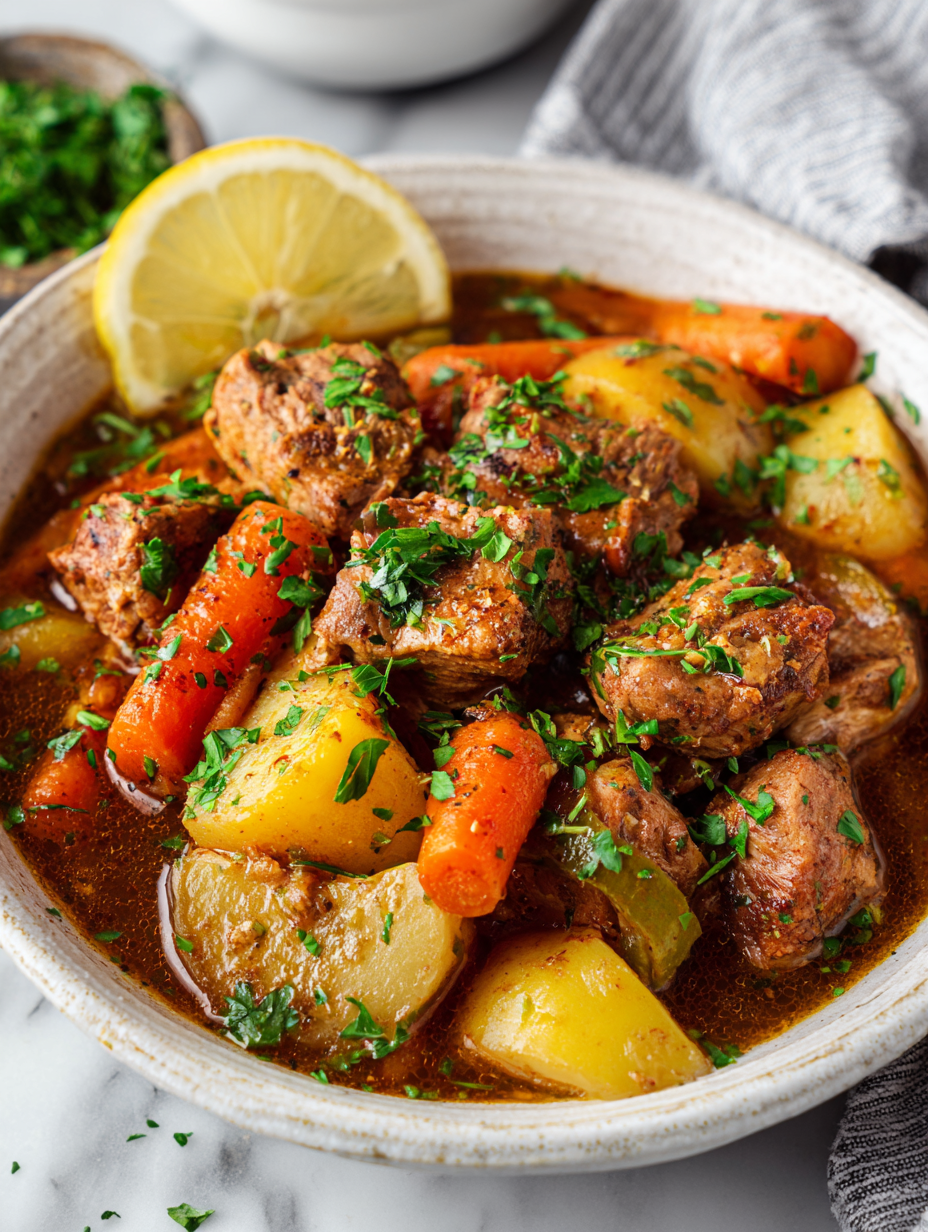
Crockpot Pork Stew
Ingredients
Equipment
Method
- Gather all your equipment and ingredients. Prepping everything beforehand makes the process smooth and enjoyable.
- Cut the pork shoulder into 2-inch chunks. Season generously with salt, pepper, and smoked paprika for a smoky depth. Set aside.
- Chop the carrots into thick 1-inch rounds, and dice the onions into medium-sized pieces. These vegetables will soften and add sweetness during cooking.
- Heat the cooking oil in a large skillet over medium-high heat until shimmering. Add the pork chunks and sear, turning occasionally, until they develop a deep golden crust, about 4-5 minutes per batch. This step locks in flavor and creates a rich aroma.
- Transfer the seared pork to your slow cooker. Add the chopped carrots and onions on top, then pour in the smoky chicken broth and Worcestershire sauce for added richness.
- Stir in the sprigs of thyme and bay leaves, then cover with the lid. Set the slow cooker to low for 6-8 hours or high for about 4 hours. Your kitchen will fill with a savory, smoky aroma.
- During cooking, check occasionally to ensure the pork is tender and vegetables are soft. If the stew appears too thick, stir in a splash of hot water or additional broth.
- When the pork is tender and easily shredded with a fork, remove the thyme sprigs and bay leaves. Add the crushed tomatoes and chopped Yukon Gold potatoes, then stir to combine.
- Let everything cook for another 30 minutes, allowing the potatoes to soften and flavors to meld. If you prefer a thicker sauce, mash some potatoes directly in the stew or stir in a cornstarch slurry and cook for another 15 minutes until glossy and thickened.
- Taste the stew and adjust seasoning with salt and pepper as needed. For an extra flavor boost, add a splash of vinegar or lemon juice to brighten the dish.
- Once ready, ladle the hearty stew into bowls. Garnish with fresh herbs if desired, and serve hot. The stew should be thick, fragrant, with tender pork and vegetables coated in a savory, smoky sauce.
Pro tips for perfect crockpot stew
- BOLD BROWNING: Sear the pork chunks until they develop a deep golden crust—this locks in flavor and adds richness.
- LAYER FLAVORS: Add a splash of Worcestershire or soy sauce during searing to boost umami before slow cooking.
- VEGETABLE TEXTURE: Don’t over-chop carrots; larger pieces hold their shape and add a nice bite after hours in the crockpot.
- SEAL IN JUICES: Keep the lid on during cooking to trap moisture and ensure the pork stays tender and juicy.
- FINISHING THICKEN: If the stew is too thin, mash some potatoes or stir in a cornstarch slurry in the last 15 minutes for a glossy sauce.
- TASTE AND ADJUST: Always taste before serving—add salt or acid (like a splash of vinegar) to brighten the flavors.
- REST BEFORE SERVING: Let the stew sit uncovered for 10 minutes after cooking to let flavors meld and sauce thicken slightly.
Common mistakes and how to fix them
- FORGOT to check pork tenderness; fix by testing with a fork after cooking.
- DUMPED too much liquid; fix by removing lid and simmering uncovered for 15 minutes.
- OVER-TORCHED vegetables; fix by adding a splash of broth and simmering gently.
- USED cold ingredients; fix by warming ingredients slightly before adding to slow cooker.
Quick fixes for common issues
- When stew looks watery, splash in a cornstarch slurry, stir, and simmer for 5 minutes.
- If pork isn’t tender enough, increase cooking time or shred and cook 30 minutes more.
- DUMPED too much salt? Add a peeled potato for 15 minutes to absorb excess salt.
- When vegetables are overcooked, patch with fresh raw carrots added in the last 30 minutes.
- Splash some vinegar or lemon juice if the stew tastes flat or dull, for a bright lift.
Prep, store, and reheat tips
- Chop vegetables and season pork a day in advance; store in airtight containers in the fridge for up to 24 hours, keeping flavors fresh and ingredients ready to go.
- The stew can be assembled the night before, stored covered in the fridge for up to 24 hours; flavors meld and deepen overnight, making reheating even better.
- Refrigerated stew lasts 3-4 days; for longer storage, freeze in airtight containers for up to 3 months—defrost overnight in the fridge before reheating.
- Reheat gently on the stovetop over low heat, stirring occasionally, until steaming hot and fragrant—look for a bubbling, thickened sauce and tender meat.
- For best sensory results, avoid reheating multiple times. When reheating, the stew should smell smoky and savory, with the sauce slightly thickened and the meat tender.
Top questions about crockpot pork stew
1. What type of pork should I use?
Look for pork shoulder with good marbling and a firm texture. It becomes tender and juicy after slow cooking.
2. Can I substitute carrots with other vegetables?
Use fresh carrots, preferably chunky-cut, for the best texture and natural sweetness that holds up over hours.
3. What other vegetables work well in this stew?
Yes, you can add potatoes, parsnips, or turnips for variety, but keep in mind how they absorb flavors and change texture.
4. How long should I cook it in the crockpot?
Cook on low for 6-8 hours or high for 4 hours until pork is falling apart and vegetables are tender.
5. My stew is too thin, what should I do?
If the stew looks too watery, remove the lid and simmer uncovered until it thickens, about 15-20 minutes.
6. How can I enhance the flavor before serving?
Add a splash of vinegar or lemon juice at the end to brighten flavors and balance richness.
7. Can I make this ahead of time?
Yes, you can prepare the ingredients the night before, store in the fridge, and assemble in the morning for a quick start.
8. How long can I store leftovers?
Stew can be refrigerated for 3-4 days or frozen for up to 3 months. Reheat gently on the stove until hot and fragrant.
9. How do I reheat without losing flavor or texture?
For reheating, simmer on low until steaming and meat is tender again. Add a splash of broth if it thickens too much.
10. What if the pork isn’t tender enough?
If pork isn’t tender after cooking, extend the time or shred it and cook for another 30 minutes to soften further.
This crockpot pork stew isn’t just a meal; it’s a reminder that slow, simple processes can create something deeply satisfying. When the aroma drifts through the house, it’s like a quiet celebration of home-cooked comfort that’s easy to pull together after a busy day.
In these colder months, there’s nothing quite like a bowl of tender, smoky pork stew to warm you from the inside out. It’s a dish that lets you unwind and enjoy the slow magic of flavor-building, even when life feels like it’s moving too fast.