Growing up, summer barbecues meant smoky grills and sweet corn melting on the tongue. This recipe for vegan stuffed peppers aims to recreate that nostalgic warmth, using simple ingredients like smoky paprika and charred corn to evoke those childhood flavors, but in a way that’s entirely plant-based.
I often find myself craving that comforting, familiar taste—something that reminds me of carefree afternoons without the heaviness of traditional cooking. These peppers are a canvas for those memories, filling the kitchen with a gentle, smoky aroma and a burst of sweet, roasted flavor in every bite.
It’s a dish that feels both lively and cozy, perfect for reconnecting with those summer days even when the season’s passed. Plus, it’s straightforward enough to whip up on a weeknight, yet special enough to serve at a weekend gathering. That balance of nostalgia and practicality keeps me coming back to this recipe again and again.
Focusing on the nostalgic appeal of childhood flavors, this recipe uses smoky paprika and sweet corn to evoke memories of summer cookouts, all while being entirely plant-based.
A nostalgic twist on stuffed peppers
- This recipe was born out of desperate pantry rummaging on a rainy Sunday, and surprisingly, it turned into a comforting staple.
- I remember the first time I grilled peppers over an open flame, the smoky aroma instantly taking me back to summer evenings.
- Cooking these peppers always feels like a small act of rebellion—vegan, vibrant, and totally satisfying.
- There’s a quiet pride I get when friends ask for seconds, not knowing how simple and forgiving this dish truly is.
- Sometimes, I just need that burst of roasted sweetness and spice to lift a rough day.
The story behind this recipe
- I stumbled upon this combination after a chaotic week of trying to clean out my fridge. The peppers looked sad but promising, and I wanted something hearty yet simple, with a punch of flavor. Cooking these reminds me how improvisation can turn leftovers into something satisfying and colorful. It’s a dish born from necessity but loved for its vibrant, smoky charm.
- One afternoon, I lit a small fire outside just to char the peppers slightly—nothing fancy, just that deep, roasted smell filling the yard. That moment made me realize how much flavor a little char can add, transforming humble ingredients into something memorable. Since then, these stuffed peppers have become my go-to when I crave comfort with zero fuss.
- Every time I make them, I think about the countless times I’ve turned a quick idea into a full, satisfying meal. It’s a reminder that cooking doesn’t need to be complicated to be delicious. Sometimes, the simplest ingredients—pepper, grains, a splash of spice—are enough to bring a little joy to the table.
Trivia and historical notes
- Vegan stuffed peppers likely evolved from traditional stuffed pepper recipes popular in Mediterranean and Latin American cuisines, adapted over time to suit plant-based diets.
- The concept of stuffing vegetables dates back centuries, originally using leftover grains, herbs, and meats; vegan versions substitute grains and legumes for a hearty filling.
- Peppers have been cultivated for thousands of years, with indigenous peoples in the Americas using them both as food and for medicinal purposes, making stuffed peppers a culinary bridge across cultures.
Ingredient breakdown: key components
- Bell peppers: I prefer large, firm peppers with a glossy sheen; their sweet aroma when roasted is irresistible. Swap for poblano if you want a smoky kick, but skip the sweetness.
- Quinoa: I love the fluffy texture and nutty flavor it adds—makes the filling feel hearty. Switch to brown rice for a chewier bite or millet for a lighter feel.
- Black beans: Creamy and satisfying, they blend into the filling smoothly. Canned, rinsed, and drained—they’re a quick fix. Swap with lentils if you want more earthiness.
- Corn: Sweet, smoky, and juicy—fresh or frozen works. Char it slightly for a smoky boost or use roasted poblano bits for a different smoky note.
- Spices (paprika, cumin): I love the smoky depth paprika brings; it’s like a warm hug. Use smoked paprika for extra smoky flavor or regular if you prefer milder warmth.
- Tomato paste: Adds richness and a slight tang—gives the filling a velvety texture. Tomato sauce can be a thinner substitute, but add a splash of olive oil to compensate.
- Herbs (cilantro, parsley): Fresh herbs brighten the filling and balance the smoky spices. Dried herbs are fine, but use half the amount and add at the end for freshness.
Spotlight on key ingredients
Bell peppers:
- I prefer large, firm peppers with a glossy sheen; their sweet aroma when roasted is irresistible. Swap for poblano if you want a smoky kick, but skip the sweetness.
- Quinoa: I love the fluffy texture and nutty flavor it adds—makes the filling feel hearty. Switch to brown rice for a chewier bite or millet for a lighter feel.
Black beans and corn:
- Black beans: Creamy and satisfying, they blend into the filling smoothly. Canned, rinsed, and drained—they’re a quick fix. Swap with lentils if you want more earthiness.
- Corn: Sweet, smoky, and juicy—fresh or frozen works. Char it slightly for a smoky boost or use roasted poblano bits for a different smoky note.
Notes for ingredient swaps
- Dairy-Free: Use coconut yogurt or cashew cream instead of cheese—adds richness, but with a slightly different tang.
- Grains: Swap quinoa for bulgur or millet—each offers a unique texture and flavor that can change the overall bite.
- Beans: Replace black beans with kidney or chickpeas—different size and creaminess, but still hearty and filling.
- Sweet Corn: Use roasted poblano pieces for a smoky twist or frozen peas for a pop of sweetness and color.
- Spices: Smoked paprika can be replaced with regular paprika if you want milder warmth, but lose that smoky depth.
- Herbs: Fresh basil or oregano work well if cilantro or parsley aren’t available—just adjust the flavor punch.
- Tomato Paste: Use tomato sauce or pureed sun-dried tomatoes for a different tomato intensity, adding either moisture or concentrated flavor.
Equipment & Tools
- Oven: To roast the peppers and cook the filling evenly.
- Baking dish: Holds the stuffed peppers during baking.
- Skillet: Sauté vegetables and mix the filling.
- Chef’s knife: Cut and prepare vegetables.
- Spoon or spatula: Stuff the peppers and mix ingredients.
Step-by-step guide to stuffing
- Preheat your oven to 200°C (390°F). Prepare a baking dish with a light coating of olive oil.
- Slice the tops off 4 large bell peppers, about 1 inch from the stem. Remove seeds and membranes carefully.
- In a skillet over medium heat (around 160°C/320°F), add a splash of oil. Sauté 1 chopped onion and 2 minced garlic cloves until fragrant, about 3 minutes, until translucent and aromatic.
- Add 1 cup cooked quinoa, 1 cup cooked black beans (rinsed), 1 cup roasted corn kernels, 1 teaspoon smoked paprika, 1 teaspoon cumin, and a pinch of salt and pepper to the skillet. Stir well and cook for another 2-3 minutes, until heated through and fragrant. The filling should be flavorful and slightly sticky.
- Stuff each pepper generously with the filling, pressing down lightly to pack. Place the stuffed peppers upright in the prepared baking dish.
- Mix 2 tablespoons tomato paste with ¼ cup water, and spoon a little over each stuffed pepper. This adds moisture and richness.
- Bake uncovered for 25-30 minutes, until peppers are tender and slightly charred at the edges. The filling should be bubbling and fragrant.
- Remove from oven and let rest for 5 minutes. Garnish with chopped fresh herbs like cilantro or parsley before serving.
- Serve warm, with optional squeeze of lemon or drizzles of olive oil for added brightness.
Let the stuffed peppers rest for 5 minutes out of the oven. Garnish with fresh herbs, then serve directly from the dish for best presentation and flavor.
How to Know It’s Done
- Peppers are tender and slightly charred around edges.
- Filling is hot and bubbling, with a rich aroma.
- Peppers hold their shape when gently jiggled and sliced open shows cooked, fluffy filling.
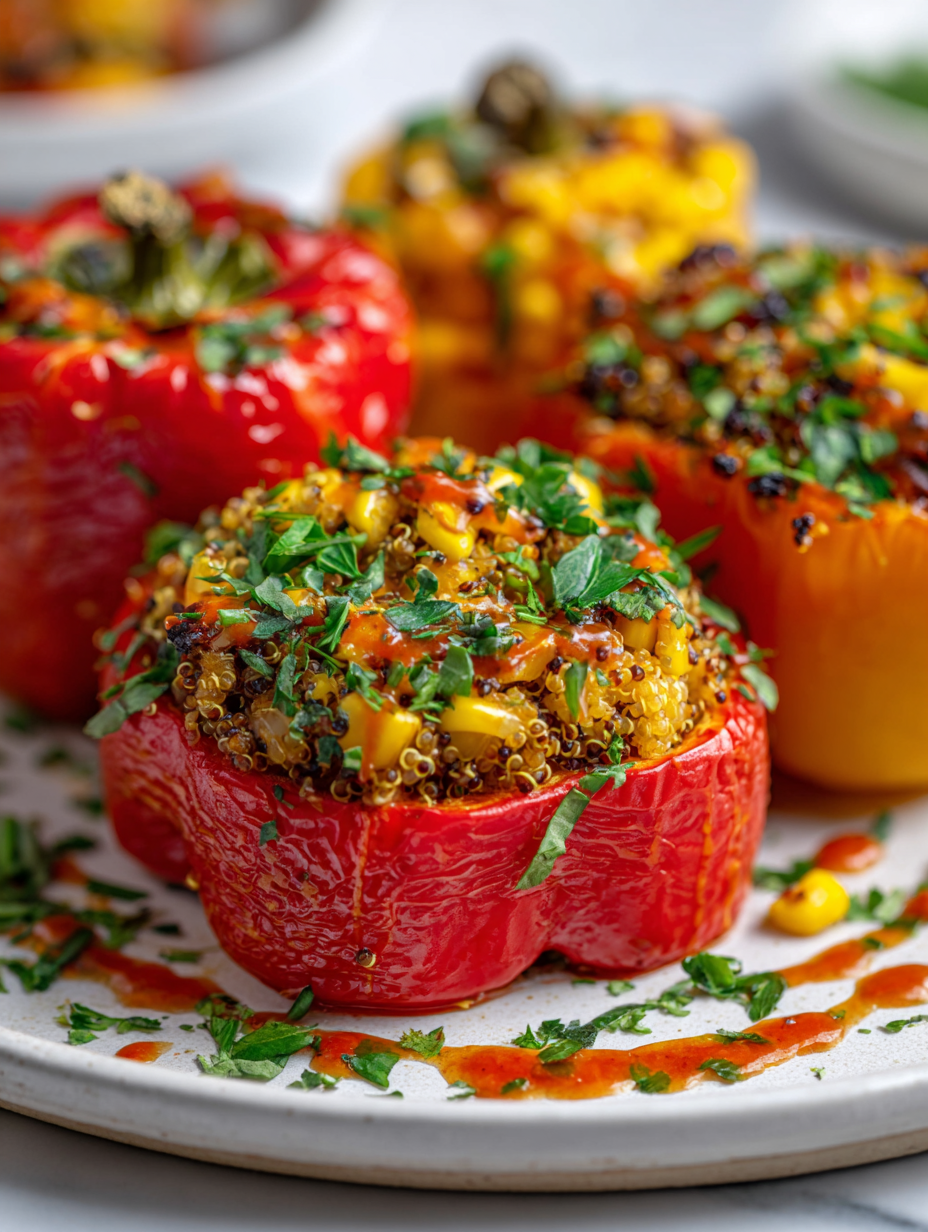
Vegan Stuffed Peppers with Smoky Corn and Quinoa
Ingredients
Equipment
Method
- Preheat your oven to 200°C (390°F) and lightly oil a baking dish.
- Slice the tops off the bell peppers and carefully remove the seeds and membranes, creating a cavity for the filling.
- In a skillet over medium heat, add a splash of olive oil, then sauté the chopped onion and minced garlic until fragrant and translucent, about 3 minutes, filling the kitchen with a savory aroma.
- Add the cooked quinoa, rinsed black beans, roasted corn, smoked paprika, cumin, salt, and pepper to the skillet. Stir everything together until well combined and heated through, about 2-3 minutes. The mixture should look vibrant and fragrant, with the spices evenly coated.
- Stuff each prepared pepper with the filling, pressing down gently to pack the mixture into the cavity.
- In a small bowl, mix the tomato paste with a splash of water and spoon a little over each stuffed pepper to add moisture and richness.
- Place the filled peppers upright in the baking dish and bake uncovered for 25-30 minutes, until the peppers are tender and slightly charred around the edges, with bubbling filling.
- Remove from the oven and let the peppers rest for 5 minutes. Garnish with chopped cilantro or parsley for a fresh burst of flavor.
- Serve warm, enjoying the smoky, hearty filling and tender roasted peppers — perfect for a cozy, satisfying meal.
Pro tips for perfect stuffed peppers
- Bolded tip: Use a hot skillet to sear the peppers briefly before baking—this adds a smoky, charred flavor.
- Bolded tip: Mix the filling ingredients well and taste for seasoning—adjust salt and spices before stuffing.
- Bolded tip: Cover the baking dish loosely with foil during the first 15 minutes to trap steam and keep peppers tender.
- Bolded tip: Add a splash of lemon juice or vinegar to the filling for a bright, fresh contrast to smoky spices.
- Bolded tip: For an extra smoky depth, sprinkle a little smoked paprika on the peppers halfway through baking.
- Bolded tip: Let the stuffed peppers rest for at least 5 minutes after baking—this helps the filling set and makes serving neater.
- Bolded tip: If peppers release too much liquid, bake uncovered the last 10 minutes to caramelize and thicken the juices.
Common mistakes and how to fix them
- FORGOT to preheat the oven → Always preheat for even roasting and baking.
- DUMPED filling directly into peppers → Slightly pack and press to avoid overflow.
- OVER-TORCHED peppers → Cover with foil if edges brown too quickly.
- MISSED resting time → Rest peppers 5 minutes for flavors to settle.
Quick fixes and pantry swaps
- When peppers release too much moisture, splash a little oil and roast longer for smoky edges.
- If filling is too dry, add a splash of veggie broth or lemon juice to brighten flavors.
- Dumped filling over the sides? Patch with extra stuffing and bake uncovered for a crispy top.
- Over-torched peppers? Shield with foil and lower oven temperature to prevent burning.
- Splash some smoked paprika or chipotle powder if pantry swap is needed for smoky depth.
Prep, store, and reheat tips
- Stuff the peppers a day in advance, keeping them covered in the fridge; the filling stays fresh and flavors meld nicely.
- Store the cooked peppers in an airtight container in the fridge for up to 2 days; reheating will intensify the smoky aroma and soften the peppers further.
- Reheat in a warm oven (around 180°C/355°F) for 10-15 minutes until heated through and filling is bubbly; the peppers will become tender and juicy again.
- For freezer storage, pack the unbaked stuffed peppers tightly in a freezer-safe container; they can last up to 3 months and are best baked directly from frozen, adding an extra 10 minutes to baking time.
- The flavors deepen over time, especially the smoky spices and herbs, but avoid over-refrigerating longer than 2 days to maintain freshness and texture.
Top questions about vegan stuffed peppers
1. What peppers work best for stuffing?
Use large, colorful bell peppers for the best flavor and appearance. They hold stuffing well and turn sweet and smoky when roasted.
2. Can I substitute other grains?
Cooked quinoa or rice can be used. Quinoa stays fluffy and nutty, but brown rice adds chewiness if you prefer a heartier bite.
3. What if I don’t have black beans?
Canned black beans are quick and creamy, but lentils or chickpeas can add different textures and flavors if you prefer variety.
4. Can I use frozen corn instead of fresh?
Fresh corn adds sweetness and juiciness, but frozen corn works just as well if you roast or char it for extra smoky flavor.
5. How can I vary the spices?
Use smoked paprika for a deep smoky flavor, or regular paprika for milder warmth. Adjust spices to suit your taste for a balanced filling.
6. Is it possible to make this dish ahead?
You can prepare the filling up to a day ahead and store it in the fridge. Assemble the peppers just before baking for fresh flavor and texture.
7. How do I know when the peppers are done?
Bake the peppers uncovered for the last 10 minutes to caramelize juices and crisp the edges. Rest for 5 minutes before serving to let flavors settle.
8. How should I reheat leftover stuffed peppers?
Reheat leftovers gently in the oven at 180°C (355°F) for about 10 minutes. The peppers will soften and the filling will re-bubble nicely.
9. My peppers are watery, what do I do?
If peppers release too much moisture, bake uncovered to evaporate excess liquid and enhance smoky edges. For a quick fix, add a splash of oil and broil briefly.
10. How do I prepare the peppers without tearing them?
Use a sharp knife to carefully cut and remove seeds from peppers. To prevent tearing, cut slowly and scoop out seeds gently with a spoon.
These vegan stuffed peppers are more than just a weeknight dinner—they’re a reminder that simple ingredients can create real comfort. The smoky aroma and sweet, tender peppers make every bite feel like a small celebration of flavor.
Whenever I make this dish, I’m struck by how easily it brings a little warmth and familiarity to the table. It’s a dish that feels straightforward, honest, and deeply satisfying, especially when you need something quick but meaningful.