Eggplant Parmesan always felt like one of those dishes that’s forgiving enough to rescue a busy weeknight dinner. It’s a bit of a chameleon, really—whatever cheese, sauce, or breading you’ve got on hand can usually work. Plus, it smells like warm, bubbling cheese and roasted eggplant, which makes the kitchen feel cozy, even if you’re scrambling to get dinner on the table.
I love how adaptable this dish is; it’s almost like a culinary blank slate. No need for perfection—just slices of eggplant, some marinara, a handful of cheese, and you’re good. It’s a great way to use up that lone eggplant sitting in the fridge, and honestly, it’s forgiving enough to make a last-minute fix without much fuss. It’s one of those recipes that feels like a hug, no matter how chaotic the day has been.
Focusing on how eggplant Parmesan can be a forgiving, no-fail family dish that adapts to whatever you have in the fridge, making it perfect for busy weeknights or last-minute gatherings.
Eggplant Parmesan as Kitchen Comfort
- Eggplant Parmesan reminds me of Sunday dinners at my grandma’s house—simple, hearty, and filled with laughter.
- There’s a quiet pride in pulling together this dish with whatever cheese or sauce I have, making it feel personal.
- I get a little nostalgic remembering how my kids used to fight over the crispy edges and melty cheese, chaos and all.
- Cooking this feels like a small act of rebellion against takeout—smelling that bubbling cheese makes everything better.
- It’s one of those dishes that’s forgiving enough to fix when I’m running late, yet still feels like a special treat.
The inspiration behind this dish
Eggplant Parmesan has always been a dish I turn to when I want something comforting but forgiving. I remember experimenting with different breadings and cheese combos, trying to make it feel less fussy. One day, I realized that the secret was in the simple layers—thin slices, a good marinara, and just enough cheese for that gooey pull. It’s a dish that’s as much about the process as the final bite—warm, melty, and a little bit rustic, perfect for those nights when you want to keep it honest and cozy.
Eggplant Parmesan Trivia & History
- Eggplant Parmesan as we know it today likely evolved in Southern Italy, blending the region’s love for eggplant and hearty tomato sauces.
- The dish gained popularity in the United States during Italian-American immigration waves in the early 20th century.
- Traditionally, it was seen as a way to make eggplant more appealing, disguising its sometimes bitter taste with cheese and sauce.
- In Italy, regional variations include adding basil or using different cheeses, reflecting local tastes and ingredients.
- The dish’s comfort factor has kept it a staple in family kitchens, especially as a forgiving, crowd-pleasing vegetarian main.
Ingredient breakdown: key components
- Eggplant: I prefer slicing it about 1/4 inch thick; it roasts to a tender, smoky bite—skip the thick slices if you want less fuss and more crispy edges.
- Breadcrumbs: I mix panko with a little Parmesan for crunch, but you can swap in crushed cornflakes for a lighter, crispier crust that crackles beautifully.
- Cheese: Mozzarella melts into that gooey, stretchy layer I love, but a mix of provolone adds a sharp tang—use what’s melting and easy to grate.
- Marinara: I like a simple, fresh-tasting sauce; if yours is too sweet or bland, a splash of vinegar or herbs can brighten it up and balance the richness.
- Basil & herbs: Fresh basil gives a bright, peppery note—if it’s out of season, a pinch of dried oregano or thyme works, but fresh really sings.
- Oil: For frying, I use a neutral oil like vegetable or canola—hot enough to crisp without smoking, about 180°C (350°F)—watch for that gentle crackle, then remove promptly.
- Seasonings: Salt and pepper are a given, but a pinch of red pepper flakes can add a subtle warmth—don’t skip tasting and adjusting before assembling.
Spotlight on key ingredients
Eggplant:
- I prefer slicing it about 1/4 inch thick; it roasts to a tender, smoky bite—skip the thick slices if you want less fuss and more crispy edges.
- Breadcrumbs: I mix panko with a little Parmesan for crunch, but you can swap in crushed cornflakes for a lighter, crispier crust that crackles beautifully.
- Cheese: Mozzarella melts into that gooey, stretchy layer I love, but a mix of provolone adds a sharp tang—use what’s melting and easy to grate.
Cheese and herbs:
- Marinara: I like a simple, fresh-tasting sauce; if yours is too sweet or bland, a splash of vinegar or herbs can brighten it up and balance the richness.
- Basil & herbs: Fresh basil gives a bright, peppery note—if it’s out of season, a pinch of dried oregano or thyme works, but fresh really sings.
- Oil: For frying, I use a neutral oil like vegetable or canola—hot enough to crisp without smoking, about 180°C (350°F)—watch for that gentle crackle, then remove promptly.
Notes for ingredient swaps
- Dairy-Free: Use a plant-based cheese or skip cheese altogether for a lighter, more herb-forward dish.
- Gluten-Free: Swap traditional breadcrumbs for crushed gluten-free crackers or almond meal for crunch without the gluten.
- Vegan: Replace cheese with a cashew-based cheese or nutritional yeast for cheesy flavor without dairy.
- Low-Sodium: Opt for no-salt-added marinara and rinse canned eggplant or use fresh to reduce salt content.
- Extra Crispy: Use panko mixed with a little cornstarch or rice flour for an even crunch that holds up better in baking.
- Smoky Flavor: Add a pinch of smoked paprika to the breadcrumb mixture to introduce a smoky depth.
- Herb Variations: Fresh thyme or oregano can replace basil for a different aromatic profile, depending on your mood.
Equipment & Tools
- Frying pan or skillet: For frying eggplant slices to crispy perfection.
- Baking dish: To layer and bake the assembled eggplant Parmesan.
- Wire rack: To drain excess oil and keep slices crispy after frying.
- Spatula: To flip and transfer slices easily.
- Mixing bowls: To prepare egg wash and breadcrumb mixture.
Step-by-step guide to Eggplant Parmesan
- Gather equipment: a shallow frying pan or skillet, a baking dish, a wire rack, and a spatula. Preheat your oven to 190°C (375°F).
- Slice eggplant into 1/4-inch thick rounds. Salt them lightly and let sit for 15 minutes to draw out moisture and bitterness. Pat dry with a paper towel.
- Set up breading station: bowl of beaten eggs, mixture of panko and Parmesan cheese, and a plate for breaded slices.
- Dip each eggplant slice into the egg wash, then coat thoroughly with breadcrumb mixture. Place on wire rack for a few minutes to set the coating.
- Heat about 1/4 inch of oil in your skillet over medium heat (around 180°C / 350°F). When shimmering and crackling, fry eggplant slices in batches for 2-3 minutes per side until golden brown. Shake off excess oil and transfer to a paper towel-lined plate.
- In a baking dish, spread a thin layer of marinara sauce. Layer fried eggplant slices over the sauce, then spoon more sauce over each layer. Sprinkle generously with shredded mozzarella and a little grated Parmesan.
- Repeat layering—eggplant, sauce, cheese—until all ingredients are used, finishing with a cheese layer on top. Cover loosely with foil.
- Bake in the preheated oven for about 25-30 minutes, until bubbling and cheese is golden. Remove foil for the last 5 minutes to crisp the top.
- Let rest for 10 minutes out of the oven. This helps the layers set, making it easier to cut and serve without everything slipping apart.
- Slice and serve hot, with extra basil or a drizzle of olive oil if desired. Enjoy that melty, crispy, smoky bite.
Let the baked eggplant Parmesan rest for 10 minutes to settle. Slice into squares and serve directly from the dish, with a sprinkle of fresh basil or a drizzle of olive oil for extra flavor.
How to Know It’s Done
- Golden, crispy eggplant slices with no sogginess.
- Bubbling, caramel-colored cheese on top of the assembly.
- A probe temp of around 75°C (165°F) in the center if checking for doneness.
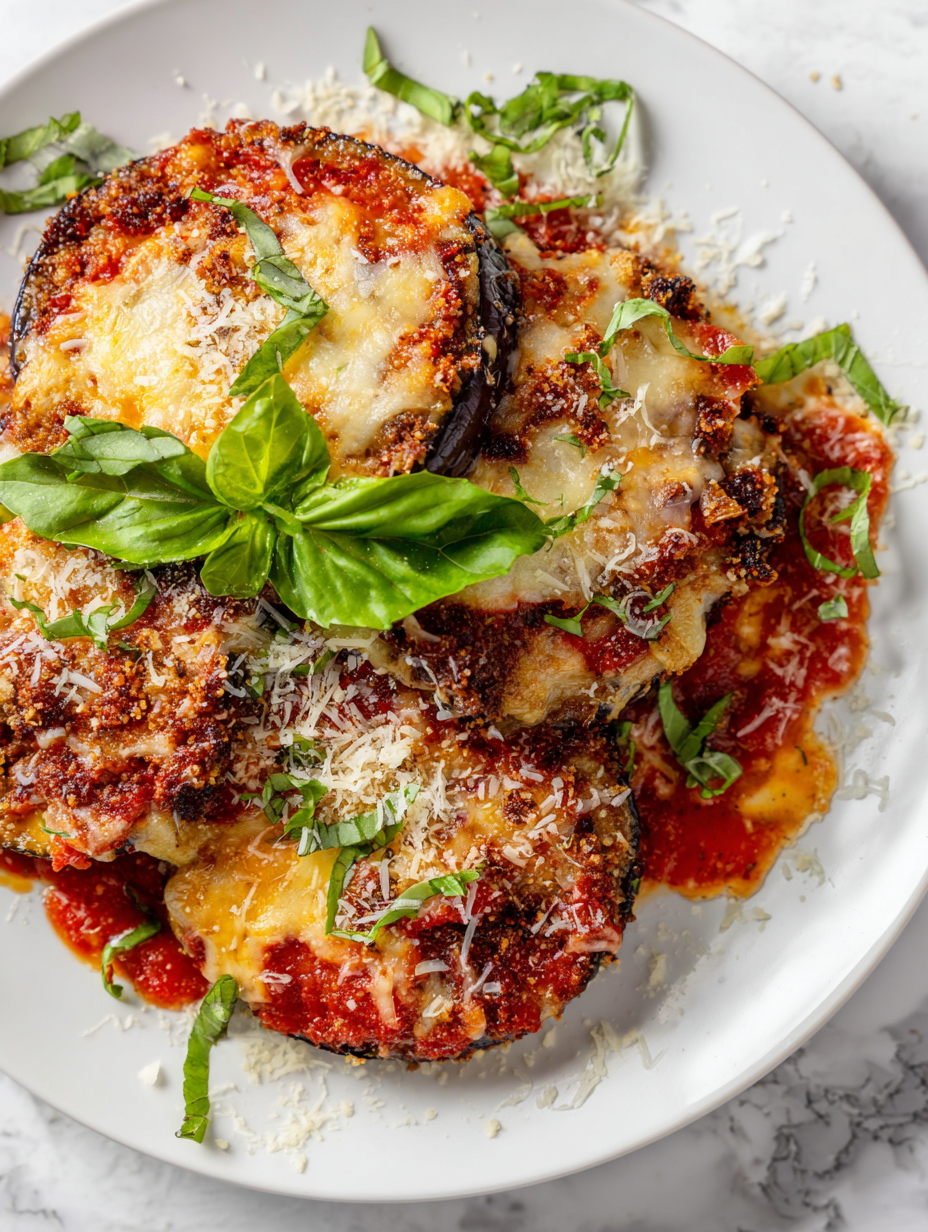
Eggplant Parmesan
Ingredients
Equipment
Method
- Lay the sliced eggplant on a baking sheet, sprinkle lightly with salt, and let sit for 15 minutes to draw out excess moisture. Pat dry with paper towels to remove moisture and bitterness.
- Set up your breading station: place beaten eggs in one bowl, and in a separate dish, mix panko breadcrumbs with grated Parmesan cheese.
- Dip each eggplant slice into the beaten eggs, ensuring it’s fully coated, then press into the breadcrumb mixture, pressing gently to adhere. Place coated slices on a wire rack to set.
- Heat oil in a skillet over medium heat until shimmering and crackling softly, around 180°C (350°F). Carefully add the breaded eggplant slices in batches, frying for 2-3 minutes per side until golden brown and crispy. Transfer fried slices to paper towels to drain excess oil.
- Spread a thin layer of marinara sauce in the bottom of a baking dish. Layer fried eggplant slices over the sauce, then spoon more sauce on top of each layer. Sprinkle shredded mozzarella cheese evenly over the top layer.
- Repeat the layering process—eggplant, sauce, cheese—until all ingredients are used, finishing with a generous layer of cheese on top. Cover loosely with foil.
- Bake in a preheated oven at 190°C (375°F) for 25-30 minutes, until bubbling and cheese is golden. Remove the foil during the last 5 minutes to crisp the cheese on top.
- Let the dish rest for 10 minutes to allow the layers to set, making it easier to slice and serve without slipping apart.
- Garnish with chopped fresh basil, if desired, and serve hot, enjoying the crispy edges, melty cheese, and tender eggplant slices.
Pro tips for Eggplant Parmesan
- Breading Technique: Dipping eggplant slices in the egg wash first, then pressing into panko mixture ensures even coating and better crunch.
- Oil Temperature: Keep oil around 180°C (350°F) for frying; use a thermometer to avoid soggy or burnt eggplant slices.
- Layering: Don’t overload the baking dish; leave space between slices for heat circulation and even melting of cheese.
- Rest Before Slicing: Let the baked dish rest for 10 minutes; this helps set the layers and prevents everything from sliding apart.
- Cheese Timing: Add cheese in the last 5 minutes of baking or broil briefly to avoid overcooking and to get a bubbly, golden top.
- Sauce Spread: Use a thin, even layer of marinara at each layer to prevent sogginess and ensure flavor reaches every bite.
- Herb Addition: Add fresh basil or herbs just before serving to preserve their bright, aromatic qualities and color.
Common Eggplant Parmesan Mistakes
- FORGOT to preheat oven or pan, leading to uneven cooking—always set it early.
- DUMPED eggplant slices too thick—slice thinner for crispier results.
- OVER-TORCHED cheese—remove from oven once bubbling and golden, not burnt.
- MISSED draining excess oil—place fried slices on paper towels immediately.
Quick Fixes & Pantry Swaps
- If slices are soggy, splash with lemon juice and pat dry to restore crispness.
- When oil shimmers and crackles, use a thermometer—aim for 180°C (350°F) for perfect frying.
- Dumped too much oil? Patch with paper towels and continue frying in smaller batches.
- When cheese over-browns, shield with foil and lower oven temperature to prevent burning.
- When breadcrumbs aren’t sticking, open pantry swap: try crushed crackers or toasted oats for crunch.
Prep, store, and reheat tips
- You can prepare the breaded eggplant slices a day ahead; store them in the fridge in an airtight container, and they’ll stay crispy for up to 24 hours. The aroma of toasted breadcrumbs and eggplant is especially tempting when reheating.
- Assemble the dish a few hours in advance—cover with foil and refrigerate. The flavors meld beautifully overnight, and the cheese develops a richer, deeper taste. Just add a splash of fresh sauce before baking if needed.
- Leftovers keep well in the fridge for 3-4 days. Reheat in the oven at 180°C (350°F) until bubbling and hot through, about 20 minutes. The cheese may soften, but the eggplant retains its tender, smoky bite.
- For freezing, layer baked portions in an airtight container or wrap tightly with foil. Freeze up to 2 months. Reheat directly from frozen in the oven, covered, at 180°C (350°F) for 30-40 minutes until bubbly and heated through, with a fragrant aroma and melted cheese.
Top questions about Eggplant Parmesan
1. Can I bake the eggplant instead of frying?
Yes, you can bake the eggplant slices instead of frying. Brush with a little oil and bake at 200°C (390°F) for about 20-25 minutes until tender and golden, which reduces oil use and still gets a crispy edge.
2. How do I prevent sogginess?
If the dish is too watery, sprinkle the sliced eggplant with salt and let sit for 15 minutes to draw out moisture, then pat dry before breading and assembling.
3. Which cheese works best?
Use fresh mozzarella for a gooey, stretchy topping or shredded provolone for sharper flavor. Low-moisture cheeses melt well and brown nicely under the broiler.
4. How can I make it vegan?
You can make this dish vegan by swapping out cheese for a plant-based alternative or nutritional yeast, and using aquafaba or flaxseed meal in the egg wash for binding.
5. How do I store and reheat leftovers?
Store leftovers in an airtight container in the fridge for up to 3 days. Reheat in the oven at 180°C (350°F) for about 20 minutes until bubbling and hot. For longer storage, freeze slices in a sealed bag for up to 2 months.
6. What kind of sauce should I use?
Choose a good-quality marinara with bright tomato flavor. Fresh garlic, basil, and a touch of olive oil will enhance the sauce, making each bite rich and vibrant.
7. What if the cheese over-browns?
If the cheese browns too quickly, loosely cover the dish with foil during baking. Use a lower oven rack and bake until bubbling, then uncover to brown the cheese at the end.
8. How do I get crispy eggplant?
Use a thermometer to ensure oil is at 180°C (350°F) for frying. Too hot and the breading burns; too cool and the eggplant absorbs excess oil, becoming greasy.
9. Any tips for extra flavor?
Adding a pinch of red pepper flakes to the breadcrumb mixture can introduce a subtle warmth, balancing the richness of the cheese and tomato sauce.
10. How can I keep the eggplant crispy after frying?
Use a slotted spoon to remove fried slices; drain excess oil on paper towels. This keeps the eggplant crispy and reduces greasiness.
This dish has a way of making a weeknight feel a little more special, even if I’m rushing to get dinner on the table. The smell of melting cheese and roasted eggplant filling the house is always a quiet victory, a reminder that simple ingredients can create something satisfying. It’s one of those recipes that’s forgiving enough to adapt and forgiving enough to feel like a small, honest triumph.
And honestly, it’s one of those meals I come back to when I need a bit of comfort that’s easy to pull together—no fuss, just good flavors. Whether I’m making it for a family or just myself, it’s a reminder that sometimes the best dishes are the ones you can tweak and still feel proud of. It’s not fancy, but it’s honest, and that’s enough.