
Lobster ravioli is one of those dishes that feels special without needing a fancy restaurant. It’s about taking the time to really balance that sweet, tender lobster with a simple pasta that carries the flavor, not overpowers it. I love how making it from scratch turns a routine dinner into a kind of quiet celebration.
There’s something satisfying about rolling out the dough, stuffing each little pouch with a generous spoon of lobster filling, and knowing you’ve made it all yourself. The process is a bit messy and chaotic, but that’s part of the charm. When you finally lift that first forkful, with the silky sauce clinging to every bite, it’s always worth it.
Focusing on the art of balancing delicate lobster flavors with homemade pasta, this recipe explores the subtle complexities of seafood in a comforting, handcrafted dish.
Rediscovering Seafood Elegance
- Making lobster ravioli feels like a small act of luxury I can do on a weeknight, and that quiet indulgence sticks with me.
- The first time I cracked open a live lobster and smelled that briny, sweet aroma, I realized this dish is about respecting seafood’s natural grace.
- There’s a nostalgic rush in shaping each ravioli by hand, like passing down a secret family recipe I’ve made my own.
- I get a little proud every time I see those delicate little packets on the plate, knowing I’ve turned simple ingredients into something special.
- Cooking this dish reminds me that sometimes, the most satisfying meals come from patience and a little messy trial and error.
The story behind this recipe
- I first stumbled upon lobster ravioli during a trip to a tiny coastal town. The small seafood market had a hand-cranked pasta machine and fresh lobster that still smelled of the ocean. Watching the owner carefully fill each ravioli, I realized how much patience and respect for ingredients this dish demands. It’s a reminder that beauty in cooking often comes from simplicity and care.
- Every time I make it, I think about that moment—how something so elegant was born from humble seafood and a bit of old-school craftsmanship. Crafting the pasta and filling by hand keeps me rooted in the process, even when the kitchen gets chaotic. It’s one of those dishes that tastes like a small celebration of the sea’s bounty.
- heading
Lobster Ravioli Trivia
- Lobster ravioli as a dish really gained popularity in Italy’s coastal regions, blending seafood with pasta traditions that date back centuries.
- The idea of stuffing pasta with seafood can be traced to ancient Italy, where fishermen’s wives used leftover lobster and shellfish to make a luxurious, filling pasta.
- Historically, lobster was considered a luxury ingredient in America, so combining it with pasta was a way to elevate humble ingredients into fine dining.
Ingredient breakdown
- Lobster: I prefer using fresh, live lobster for that sweet, briny aroma which really punches through the pasta. If unavailable, high-quality frozen lobster works, but avoid those overly processed options.
- Pasta Dough: I find a mix of semolina and all-purpose flour gives the dough a nice bite and resilience. For a silkier texture, add an egg yolk or a splash of olive oil—just enough to keep it manageable when rolling thin.
- Lobster Filling: I like to keep the filling simple—lobster meat, a touch of ricotta, lemon zest, and a whisper of herbs. It’s a delicate balance—too much filler can overpower the lobster’s sweetness, so keep it light and bright.
- Egg Wash: Just a beaten egg brushed on the edges seals the ravioli well. It’s the glue that keeps everything together during boiling, so don’t skimp. The golden sheen at the end makes it look extra inviting.
- Sauce: A browned butter with sage and a squeeze of lemon brightens the dish beautifully. I love the way the nutty aroma of butter complements the lobster, and that citrus zing lifts every bite.
Spotlight on key ingredients
Lobster:
- I prefer using fresh, live lobster for that sweet, briny aroma which really punches through the pasta. If unavailable, high-quality frozen lobster works, but avoid those overly processed options.
- Pasta Dough: I find a mix of semolina and all-purpose flour gives the dough a nice bite and resilience. For a silkier texture, add an egg yolk or a splash of olive oil—just enough to keep it manageable when rolling thin.
- Lobster Filling: I like to keep the filling simple—lobster meat, a touch of ricotta, lemon zest, and a whisper of herbs. It’s a delicate balance—too much filler can overpower the lobster’s sweetness, so keep it light and bright.
Pasta dough and sauce components:
- Egg Wash: Just a beaten egg brushed on the edges seals the ravioli well. It’s the glue that keeps everything together during boiling, so don’t skimp. The golden sheen at the end makes it look extra inviting.
- Sauce: A browned butter with sage and a squeeze of lemon brightens the dish beautifully. I love the way the nutty aroma of butter complements the lobster, and that citrus zing lifts every bite.
- Dough Ingredients: Semolina and all-purpose flour create a resilient, slightly chewy pasta that holds the filling well. The aroma when rolling out is subtly nutty and fresh.
Notes for ingredient swaps
- Seafood-Free: Swap lobster for cooked chicken or mushrooms for a vegetarian twist, but expect a milder, earthier flavor.
- Gluten-Free: Use rice or corn-based pasta dough instead of wheat, which results in a softer, more fragile ravioli.
- Dairy-Free: Replace ricotta with blended silken tofu or cashew cream for a creamy texture without dairy, though less rich.
- Lemon Zest: Use orange or lime zest for a different citrus note that brightens without overpowering the lobster flavor.
- Herbs: Swap fresh herbs for dried ones if fresh aren’t available—just use half the amount to avoid overpowering the delicate filling.
Equipment & Tools
- Large pot: For boiling the ravioli.
- Pasta machine or rolling pin: To roll out the dough thinly.
- Baking sheet with parchment: To hold formed ravioli before cooking.
- Small bowl: To hold egg wash for sealing.
- Skillet: To prepare and toss the sauce.
Step-by-step guide to Lobster Ravioli
- Gather your equipment: a large pot for boiling, a pasta machine or rolling pin, a small bowl for egg wash, and a spoon for filling. Have a baking sheet lined with parchment ready for the ravioli.
- Prepare the pasta dough: Mix 2 cups of semolina flour with 1 cup all-purpose flour. Make a well, crack in 2 eggs, add a tablespoon of olive oil. Knead until smooth, about 8-10 minutes. Wrap in plastic and rest for 30 minutes.
- While dough rests, prepare the lobster filling: chop cooked lobster meat finely, mix with 1/4 cup ricotta, a teaspoon lemon zest, a pinch of chopped herbs, salt, and pepper. Adjust seasoning to taste.
- Roll out the dough: Divide into 4 portions. Use a pasta machine or rolling pin to flatten each into a thin sheet, about 1 mm thick. Keep covered to prevent drying out.
- Cut the dough into squares: about 3 inches by 3 inches. Place a teaspoon of filling in the center of each square. Brush edges with egg wash (1 beaten egg).
- Seal the ravioli: Fold each square over, pressing out air and sealing edges firmly with your fingers or a fork. Place on the prepared baking sheet, spaced apart.
- Cook the ravioli: Bring a large pot of salted water to a boil (~100°C / 212°F). Gently drop in ravioli. Cook for 3-4 minutes, or until they float and are tender. Check for doneness by tasting a piece.
- Finish the sauce: In a skillet, melt 2 tablespoons of butter over medium heat. Add a few sage leaves and cook until fragrant (~2 min). Squeeze in lemon juice and season with salt.
- Drain the ravioli carefully, transfer to the skillet with browned butter. Toss gently to coat. Serve immediately, garnished with extra sage or herbs if desired.
Let the pasta rest covered for 30 minutes. Serve hot, drizzled with browned butter sauce and fresh herbs for a simple, elegant presentation.
How to Know It’s Done
- Ravioli float to the surface and are firm but tender when tested.
- The pasta edges are golden and sealed tightly, with no gaps.
- The sauce smells nutty and fragrant, with a bright lemon aroma.
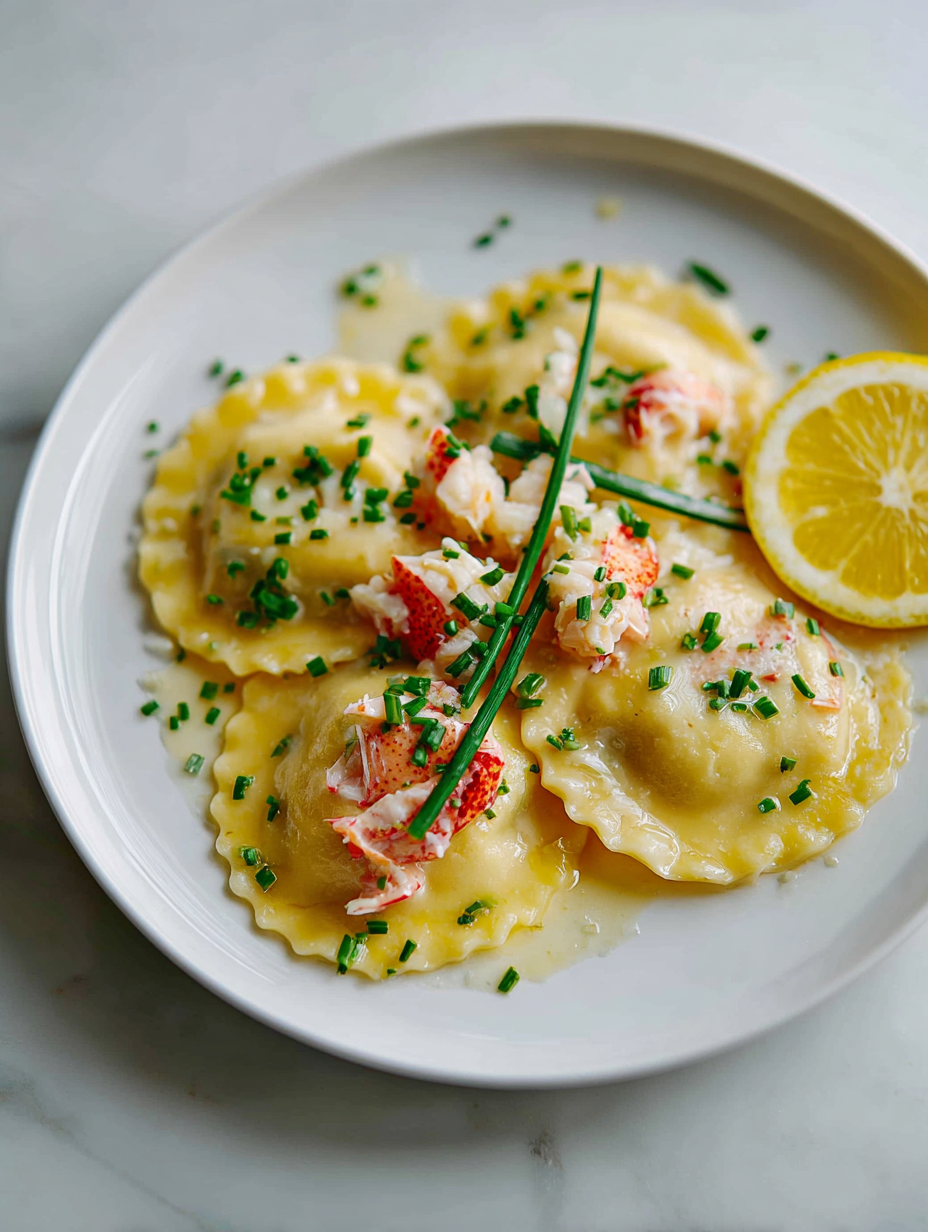
Lobster Ravioli
Ingredients
Equipment
Method
- Chop the lobster meat into small, fine pieces, then mix it with ricotta, lemon zest, a pinch of salt, and some chopped herbs if desired. Set aside to let the flavors meld.
- In a large bowl, combine semolina and all-purpose flour. Make a well in the center and crack in the eggs, then add olive oil. Mix and knead until the dough is smooth, elastic, and slightly sticky, about 8-10 minutes. Wrap in plastic and let it rest for 30 minutes to relax the gluten.
- Divide the rested dough into four parts. Using a pasta machine or rolling pin, roll each portion out into a thin sheet, about 1 mm thick, dusting lightly with flour to prevent sticking. Keep the sheets covered to prevent drying out.
- Cut the sheets into squares roughly 3 inches by 3 inches. Place a teaspoon of lobster filling in the center of each square. Brush the edges with beaten egg to act as glue.
- Fold each square over the filling to form a half-moon shape, pressing out any air and sealing the edges tightly. Use your fingers or a fork to crimp the edges for a secure seal. Place the finished ravioli on a parchment-lined baking sheet, spaced apart.
- Bring a large pot of salted water to a boil. Gently drop the ravioli into the water, cooking for 3-4 minutes, or until they float and are tender. Carefully remove with a slotted spoon and set aside.
- In a skillet, melt the butter over medium heat until it begins to turn golden and fragrant, about 2 minutes. Add the sage leaves and cook until crispy, then squeeze in lemon juice and season with a pinch of salt.
- Gently toss the cooked ravioli in the browned butter sauce, ensuring each piece is coated evenly. Serve immediately with a sprinkle of fresh herbs or additional lemon zest if desired for a bright finish.
- Enjoy your beautifully crafted lobster ravioli, with the tender pasta, luscious lobster filling, and fragrant browned butter sauce coming together in every bite.
Pro Tips for Lobster Ravioli
- Bolded mini-head: Use a pasta machine or rolling pin → Roll dough as thin as possible for delicate ravioli.
- Bolded mini-head: Wait for the ravioli to float → Indicates they’re perfectly cooked and tender.
- Bolded mini-head: Brush edges with egg wash → Ensures a tight seal and prevents leaks during boiling.
- Bolded mini-head: Cook in salted boiling water → Keeps the pasta flavorful and prevents sticking.
- Bolded mini-head: Use browned butter and sage → Adds a nutty aroma and earthy contrast to the lobster filling.
- Bolded mini-head: Rest the pasta for 30 minutes → Resting helps gluten relax, making rolling easier.
- Bolded mini-head: Check sauce consistency → Should coat the pasta without pooling, for a silky finish.
Common Lobster Ravioli Mistakes
- FORGOT to check ravioli float test → Do a gentle jiggle to see if they rise.
- DUMPED sauce directly on hot ravioli → Toss gently in a warm pan to avoid breakage.
- OVER-TORCHED the butter → Remove from heat once it turns nutty and fragrant, not dark brown.
- MISSED sealing edges properly → Seal edges firmly and press out air to prevent leaks.
Quick Fixes for Lobster Ravioli
- When sauce shimmers, add a splash of lemon juice to brighten flavors.
- Splash cold water on boiling ravioli if they stick to prevent tearing.
- Patch overboiled ravioli with a quick toss in butter for extra flavor.
- Shield undercooked ravioli with a lid and steam for 1 minute more.
- If sauce cracks or separates, whisk in a teaspoon of warm water to smooth.
Prep, store, and reheat tips
- You can prepare the lobster filling and make the pasta dough a day ahead. Keep them wrapped tightly in the fridge to preserve freshness and prevent drying out. The filling stays good for up to 24 hours, maintaining its sweet lobster aroma.
- Assemble and seal the ravioli up to 2 hours before cooking. Place them on a parchment-lined tray, lightly dusted with flour, and cover with a damp cloth. The pasta edges may dry slightly, so work quickly when boiling to prevent cracking.
- Cooked ravioli can be stored in an airtight container in the fridge for up to 24 hours. Reheat gently in simmering water for 1-2 minutes until heated through. The texture should remain tender, with the filling moist and flavorful.
- The browned butter sauce is best made fresh, but you can prepare and keep it warm in a small saucepan on low heat for up to 30 minutes. Reheat gently if needed, and watch for signs of browning or burning—smell the nutty aroma to gauge readiness.
- Avoid freezing raw or cooked ravioli unless tightly sealed and flash-frozen. Freezing can cause the pasta to become brittle, and the lobster filling may lose its delicate texture. If frozen, cook from frozen, adding an extra minute or two.
Lobster Ravioli FAQs
1. Can I use frozen lobster?
Fresh lobster gives the sweetest, briniest flavor, but high-quality frozen works if fresh isn’t available.
2. Can I prepare the filling ahead?
Yes, just thaw it thoroughly and pat dry to avoid excess moisture that can make the filling soggy.
3. How do I know when the ravioli are done?
Cook the ravioli in salted boiling water until they float and are tender, about 3-4 minutes.
4. What if the ravioli leak during cooking?
Seal the edges well with egg wash; if they leak, gently press out air and reseal.
5. How should I cut the pasta sheets?
Use a sharp knife or pasta cutter to get clean edges for easier sealing and a neat presentation.
6. What sauce pairs best with lobster ravioli?
Browned butter with sage and lemon brightens the rich lobster flavor and adds a nutty aroma.
7. Should I rest the pasta after shaping?
Rest the assembled ravioli for 30 minutes before boiling to help gluten relax and prevent tearing.
8. My sauce is too thick; what now?
If sauce thickens too much, whisk in a splash of warm water or broth to loosen it up.
9. How long can I keep assembled ravioli before cooking?
Store unboiled ravioli in an airtight container with parchment between layers for up to 2 hours in the fridge.
10. How do I reheat leftovers without losing texture?
Reheat cooked ravioli gently in simmering water for 1-2 minutes, keeping the filling moist and tender.
Making lobster ravioli feels like a quiet act of celebration. The way the rich, briny aroma mingles with buttery sauce is a reminder of how simple ingredients can create something memorable.
This dish isn’t just about impressing others; it’s about connecting with the process, respecting seafood, and appreciating the small, handcrafted details that make it special. Sometimes, the mess and chaos in the kitchen lead to the most satisfying bites.