There’s something almost meditative about the slow process of browning lamb shanks. I find that taking the time to develop a deep, caramelized crust really turns this dish into a quiet ritual, not just a meal. It’s like giving the meat a moment to build its own flavor story, layer by layer.
Building the sauce with red wine feels like a gentle art—reducing, simmering, waiting. It’s a simple pleasure to watch the rich, ruby liquid thicken and concentrate, filling the kitchen with a warm, inviting aroma. This isn’t a rush job; it’s about patience and respect for the ingredients, turning humble ingredients into something memorable.
Focusing on the slow, meditative process of browning the lamb shanks and building flavor through patience, turning a simple comfort dish into a mindful kitchen ritual.
The meditative art of slow cooking
- Cooking this dish always feels like a slow, comforting ritual I look forward to after a hectic day.
- There’s a strange pride in watching the sauce thicken into a glossy, deep red that coats the lamb perfectly.
- I love the way the smell of red wine and roasted lamb fills the kitchen, instantly calming my nerves.
- Serving this meal makes me nostalgic for family dinners around a big table, sharing stories over rich sauce.
- I get a bit lost in the process—stirring, taste-testing, adjusting—feeling truly connected to the food I make.
The origin of this dish
This recipe was born out of a desire to slow down and really savor the process of cooking. I once spent a rainy afternoon experimenting with braising lamb shanks, trying to coax out every ounce of flavor from simple ingredients. The red wine sauce, in particular, became my favorite part—its rich aroma and velvety texture transform the dish into a cozy, contemplative meal. Now, I turn to this recipe whenever I need a reminder that patience in the kitchen always pays off.
Historical and cultural notes
- Lamb shanks have been a Sunday roast staple in Mediterranean cuisines for centuries, valued for their rich flavor and forgiving braising qualities.
- The tradition of braising tougher cuts like shanks dates back to ancient stews, where slow cooking softened the meat and infused it with deep, layered flavors.
- Red wine sauces became popular in French cuisine during the Renaissance, emphasizing the art of reduction and concentration of flavors.
- In many cultures, lamb shanks symbolize celebration and abundance, often served during festive gatherings with hearty, slow-cooked accompaniments.
- The technique of braising with wine is believed to have originated in regions where vineyards and pastoral farming intersect, blending local ingredients into comforting dishes.
Ingredient breakdown: key components
- Lamb shanks: I prefer bone-in shanks for their rich, gelatinous marrow that makes every bite luxurious; if you use boneless, the meat cooks faster but loses that extra flavor punch.
- Red wine: I choose a sturdy, dry red like Cabernet Sauvignon—its deep notes and smoky undertones really shine in the sauce; swap with a good quality merlot if you want a softer, fruitier finish.
- Onions and garlic: I love the way onions caramelize slowly, turning sweet and golden—if you rush this step, the sauce won’t develop that rich depth; garlic adds a punch, so don’t skip it.
- Herbs (thyme & bay leaves): I keep these fresh because they release a fragrant, earthy aroma during braising; dried herbs can work, but they’re less vibrant and more bitter if overused.
- Beef or chicken broth: I use homemade or low-sodium store-bought for a cleaner, more nuanced flavor; if you only have water, add a splash of soy sauce or Worcestershire for umami richness.
- Olive oil: I use good-quality extra virgin for browning—its fruity, peppery notes add complexity; skip or use neutral oil if you prefer a milder base for searing.
- Carrots and celery (optional): I add a subtle sweetness that balances the richness; omit if you want a more intense wine-forward sauce, but they mellow the overall flavor beautifully.
Spotlight on Key Ingredients
Lamb shanks:
- I love the way the marrow oozes out, turning the meat melt-in-your-mouth; if you skip the bone, it loses some richness.
- Bone-in: The bone adds flavor and gelatin, making the sauce silkier and the meat more tender; boneless is quicker but less flavorful.
Red wine:
- I prefer a robust, dry variety like Cabernet—its smoky, fruity notes deepen during reduction; a merlot adds softness and roundness.
- The smell of simmering wine is intoxicating—just enough to make the kitchen smell like a cozy cellar; avoid cheap brands that taste sour or bitter.
Notes for ingredient swaps
- Red wine: Swap with a dry port or sherry for a sweeter, nutty complexity that still enriches the sauce.
- Lamb shanks: Use beef short ribs or pork shoulder for a similar slow-cooked, fall-apart texture with different flavor profiles.
- Olive oil: Neutral vegetable oil or bacon fat can be used if you prefer a less fruity, more straightforward sear.
- Herbs (thyme & bay): Dried herbs work well if fresh aren’t available, but add them earlier to maximize flavor release.
- Broth: Use mushroom or vegetable broth for a vegetarian version that still offers umami richness, though less meaty.
- Carrots & celery: Parsnips or fennel can replace them, adding unique sweetness or an anise note, respectively.
- Garlic: Shallots or leeks can substitute for a milder, sweeter aromatic if garlic isn’t to your taste.
Equipment & Tools
- Dutch oven or heavy-bottomed braising pot: For even heat distribution and slow cooking.
- Tongs: To turn and handle the lamb shanks without piercing the meat.
- Wooden spoon: Stir and deglaze, avoiding scratching the pot.
- Sharp knife: Prep vegetables and trim lamb shanks.
Step-by-step guide to braising
- Gather your equipment: a large heavy-bottomed braising pot or Dutch oven, tongs, a wooden spoon, and a sharp knife for prep.
- Preheat your oven to 160°C (320°F). Pat the lamb shanks dry with paper towels—moisture is the enemy of good browning.
- Heat a few tablespoons of olive oil over medium-high heat in the pot. When shimmering, add shanks, browning on all sides—about 4-5 minutes per side. Turn with tongs, ensuring an even, deep caramel color.
- Remove shanks and set aside. In the same pot, add chopped onions, carrots, and celery (if using). Cook until softened and golden—about 8 minutes—stir frequently. Add minced garlic and cook until fragrant, about 1 minute.
- Pour in a bottle of good red wine, scraping up browned bits from the bottom. Bring to a simmer and cook until reduced by half—about 10 minutes—smelling rich and fragrant.
- Return lamb shanks to the pot, nestling into the sauce. Add fresh thyme sprigs and bay leaves. Pour in enough beef or chicken broth to come halfway up the meat. Bring to a gentle simmer.
- Cover the pot, transfer to the oven, and braise for 2.5 to 3 hours, or until the meat is fall-off-the-bone tender. Check occasionally; if the liquid reduces too much, add a splash more broth.
- Once done, carefully remove shanks and tent with foil. Place the pot back on the stove over medium heat to reduce the sauce if needed, simmering until thick and glossy—about 10 minutes. Adjust seasoning with salt and pepper.
- Rest the lamb shanks for 10 minutes before serving. Spoon the sauce over the meat, garnish with fresh herbs if desired. Serve with crusty bread or mashed potatoes.
Let the shanks rest for 10 minutes covered loosely with foil. Meanwhile, finish the sauce by reducing it to your desired consistency. Serve the meat hot, drizzled with the luscious sauce, alongside your preferred sides.
How to Know It’s Done
- Meat is tender and falling off the bone.
- Sauce is rich, glossy, and coats the back of a spoon.
- Color of the sauce deepens with reduction, smelling smoky and fragrant.
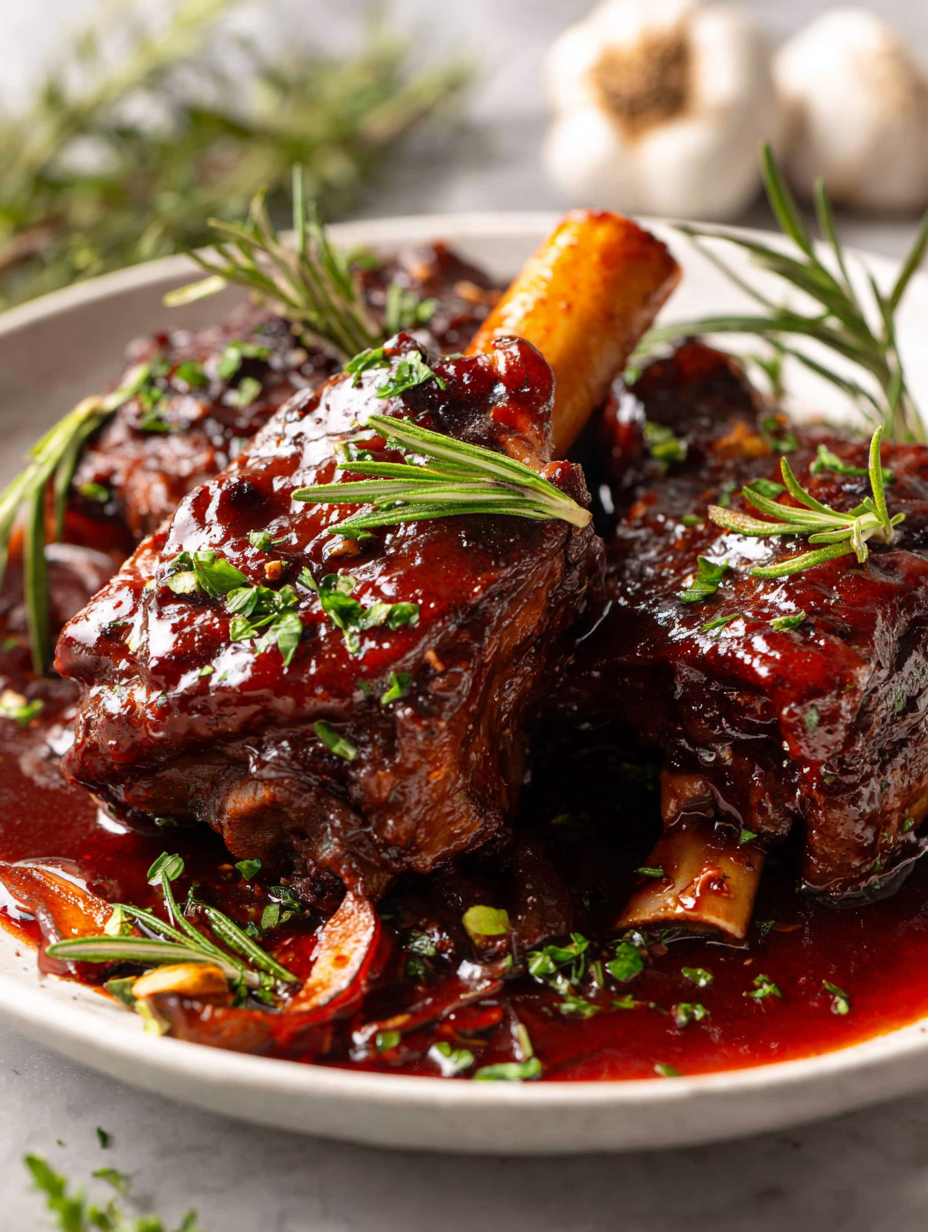
Braised Lamb Shanks in Red Wine Sauce
Ingredients
Equipment
Method
- Pat the lamb shanks dry with paper towels to ensure a good sear. Heat olive oil in a Dutch oven over medium-high heat until shimmering, then add the shanks. Sear each side until deeply golden brown, about 4-5 minutes per side, until a rich caramel crust forms. Remove and set aside.
- Add chopped onions, carrots, and celery to the same pot. Cook over medium heat, stirring occasionally, until the vegetables are softened and golden, about 8 minutes. The kitchen will fill with a sweet aroma as they caramelize.
- Stir in the minced garlic and cook for about 1 minute until fragrant, making sure it doesn't burn. Pour in the red wine, scraping up any browned bits from the bottom of the pot with a wooden spoon. Bring to a gentle simmer and cook until the wine reduces by half, about 10 minutes, until the liquid is thick and fragrant.
- Return the browned lamb shanks to the pot, nestling them into the wine and vegetable mixture. Add the thyme sprigs, bay leaves, and pour in the broth until the shanks are halfway submerged. Season with salt and pepper to taste.
- Cover the pot with a tight-fitting lid and transfer to a preheated oven set to 160°C (320°F). Braise for about 2.5 to 3 hours, or until the meat is falling off the bone and tender. Check occasionally, adding more broth if the liquid level drops too low.
- Once cooked, carefully remove the lamb shanks from the pot and tent with foil. Place the pot back on the stove over medium heat to reduce the sauce if needed, simmering until glossy and thick—about 10 minutes. Taste and adjust seasoning as necessary.
- Rest the lamb shanks for 10 minutes to allow the juices to redistribute. Then, serve the tender meat topped with the rich, glossy sauce. Pair with crusty bread or mashed potatoes for a comforting, hearty meal.
Pro tips for perfect lamb shanks
- Sear lamb shanks until deeply caramelized—this develops flavor and adds a smoky aroma.
- Deglaze the pan with wine, scraping up browned bits—these intensify the sauce’s richness.
- Reduce the wine until it’s thick and syrupy—this concentrates flavor and creates a glossy sauce.
- Maintain gentle simmer during braise—this keeps the meat tender without drying out or overcooking.
- Rest the shanks briefly after cooking—this redistributes juices and ensures moist, tender meat.
- Finish with a quick sauce reduction—this adds a velvety, flavorful coating that clings to the meat.
Common mistakes and how to fix them
- FORGOT to lower heat before adding wine → Sear at high heat, then reduce for deglazing.
- DUMPED too much liquid during braising → Keep an eye on liquid level; add broth if needed.
- OVER-TORCHED the sauce while reducing → Reduce over medium heat, stirring constantly for control.
- SKIPPED resting time before serving → Rest meat 10 minutes for better juiciness and flavor.
Quick fixes and pantry swaps
- When sauce shimmers and smells smoky, it’s ready—rescue with a splash of water if it’s too thick.
- Splash in a bit of vinegar or lemon juice if the sauce tastes flat or dull in flavor.
- Patch a broken sauce by whisking in a small pat of cold butter to emulsify and smooth it out.
- Shield overcooked lamb shanks with foil and gently reheat in a low oven for tender, moist meat.
- When wine reduces too much, swap with a splash of broth to regain liquid and keep flavor balanced.
Prep, store, and reheat tips
- You can prep the lamb shanks and vegetables a day ahead; keep them in airtight containers in the fridge for up to 24 hours, where the flavors will deepen and mellow.
- The cooked dish can be stored in the fridge for 2-3 days; reheat gently on the stovetop over low heat, stirring occasionally until warmed through and fragrant, about 10 minutes, with a slight simmer to restore the sauce’s richness.
- For longer storage, freeze in portions for up to 2 months; thaw overnight in the fridge and reheat slowly, watching for the sauce to thicken and develop a velvety sheen again.
- Reheated lamb may lose some tenderness, so handle gently and avoid boiling—just a gentle simmer helps preserve moisture and flavor. The aroma of wine and herbs will be even more concentrated, so taste and adjust seasoning accordingly.
Top questions about lamb shanks
1. How do I choose the best lamb shanks?
Look for shanks with a good amount of marrow and firm, meaty texture. The bone should be clean and not cracked.
2. What kind of wine works best for this sauce?
Use a full bottle of good red wine—nothing too sweet or cheap. The wine’s aroma and flavor will intensify during cooking.
3. How important is browning the meat?
Browning the shanks well brings out a deep caramel flavor. Don’t rush this step—wait until they’re richly golden all over.
4. What oven temperature should I use?
Cooking at 160°C (320°F) in the oven ensures gentle, even braising. Keep the lid on so the meat stays moist.
5. Should I rest the meat before serving?
Let the lamb rest for 10 minutes after cooking; this helps juices redistribute, keeping the meat tender and moist.
6. How do I know when the sauce is reduced enough?
Reduce the wine until thick and syrupy—this concentrates flavors. If the sauce gets too thick, add a splash of broth to loosen it.
7. How should I store and reheat the lamb shanks?
Store leftovers in an airtight container in the fridge for up to 3 days. Reheat gently over low heat, adding a little broth if needed.
8. Can I make this vegetarian?
For a vegetarian version, swap lamb with hearty vegetables like eggplant or mushrooms, and use vegetable broth instead of meat-based stock.
9. What if the sauce is too dull?
If the sauce tastes flat, add a splash of vinegar or lemon juice to brighten the flavors—just a few drops do the trick.
10. How long should I braise the shanks?
Slow, patient cooking brings out the best flavors. Resist the urge to crank up the heat—this dish is about gentle, long braising.
Cooking this dish is a quiet act of patience, filling the kitchen with the deep, smoky aroma of wine and slow-cooked lamb. It’s about embracing the process, not rushing through it, and finding comfort in the rich, tender meat and glossy sauce.
In the end, it’s a meal that invites slow savoring and lingering at the table. The flavors deepen overnight, making leftovers just as satisfying, if not more so, as the first warm bites. That’s the quiet magic of lamb shanks with red wine sauce—simple, honest, deeply satisfying.