Fresh basil might seem like just a garnish, but its aroma and subtle nuances can truly make or break a simple spaghetti dish. I’ve learned to pay attention to how heat changes that fragrant burst, transforming it from bright and punchy to mellow and smoky, depending on when I add it. It’s a tiny detail that elevates the whole experience, turning an everyday meal into something memorable.
This recipe isn’t about perfection or fuss; it’s about embracing the simple beauty of fresh ingredients and understanding their little secrets. I’ve cooked countless versions, but I always come back to the moment I tear basil leaves right before tossing them in—those tiny bursts of aroma are what make it feel alive. It’s a reminder that even the simplest dishes can reveal layers of flavor with just a bit of attention.
Focusing on the overlooked importance of fresh basil’s aroma and how it transforms during cooking, this recipe emphasizes the sensory journey from chopping to tasting, highlighting the herb’s subtle nuances that often go unnoticed.
The overlooked magic of fresh basil
- I love how fresh basil smells like summer in a bunch, especially when I tear it right before adding to pasta.
- There’s a quiet pride in making this dish with just a handful of ingredients, yet it feels like a little celebration.
- Sometimes I get overwhelmed by too many options, but this simple combo always pulls me back to the basics I trust.
- A whiff of garlic sizzling in olive oil, paired with basil, instantly transports me to my childhood kitchen.
- Few things are as satisfying as watching bright red tomato juice mingle with fragrant basil leaves, creating a messy, flavorful sauce.
The story behind this recipe
- I remember the first time I made this dish during a summer visit to Italy. The scent of ripe tomatoes and fresh basil wafting through the kitchen was intoxicating, making me realize how much simplicity can deliver pure joy. Since then, I’ve kept coming back to this recipe, tweaking little steps, but always loving that burst of herbaceous brightness that fresh basil provides. It’s a dish that reminds me to slow down and savor each ingredient’s true character.
- Every time I tear basil leaves to add to my pasta, I think about how that simple act releases so much aroma—like a tiny celebration in my hands. The chaos of a busy day melts away when I focus on that moment. It’s not about fancy techniques; it’s about trusting fresh ingredients and letting their natural flavors shine. This dish became my go-to for weeknights when I need something quick but full of soul.
- heading: The magic of fresh basil
Historical & Cultural Tidbits
- This dish traces its roots to Italy’s simple peasant meals, where fresh, local ingredients were king.
- The pairing of tomato and basil became iconic in Naples, especially with the advent of canned tomatoes in the 19th century.
- Fresh basil was once considered a sacred herb in many Mediterranean cultures, symbolizing love and protection.
- The idea of tossing pasta with fresh herbs and tomatoes was a way for farmers to use seasonal ingredients at their peak.
Ingredient breakdown: key components
- Tomatoes: I prefer ripe, juicy heirlooms—they bring a sweet, almost fruity brightness that’s hard to beat. Swap with canned crushed tomatoes if fresh aren’t in season, but taste the difference in that sun-kissed sweetness.
- Basil: Nothing beats fresh basil for that aromatic punch. Tear the leaves right before tossing—they release oils and scent that wilts beautifully into the sauce. Dried basil? It’s a different, more subdued vibe, best for long stews.
- Garlic: I love using fresh garlic, sliced thin and crisped in olive oil until fragrant. Overcooking makes it bitter; aim for a light golden hue and a scent that’s sweet and nutty, not burnt.
- Olive Oil: Use good quality extra virgin—it’s the base of flavor here. I swirl it generously, watching it shimmer and listen for that gentle crackle when garlic hits the oil. Skip cheap oil; it’s worth the extra for richness.
- Spaghetti: I go for a traditional dried pasta, cooked just until al dente. The slight chew contrasts beautifully with the tender tomatoes and fragrant basil. Fresh pasta works too, just adjust cooking time.
- Salt: I salt the pasta water generously—salty like the sea, they say. It’s the only chance to season the pasta itself, so don’t hold back. Taste the water; it should taste like brine.
- Black Pepper: Freshly cracked, it adds a subtle heat. I sprinkle it right at the end—just a few turns—so the aroma stays lively and sharp, balancing the sweet tomato and basil.
Spotlight on key ingredients
Tomatoes:
- I prefer ripe, juicy heirlooms—they bring a sweet, almost fruity brightness that’s hard to beat. Swap with canned crushed tomatoes if fresh aren’t in season, but taste the difference in that sun-kissed sweetness.
- Basil: Nothing beats fresh basil for that aromatic punch. Tear the leaves right before tossing—they release oils and scent that wilts beautifully into the sauce. Dried basil? It’s a different, more subdued vibe, best for long stews.
Basil:
- The aroma of fresh basil is vivid and lively, almost citrusy when torn. During cooking, it wilts quickly, releasing a fragrant oil that infuses the entire dish, making each bite feel brighter. Use fresh basil at the end for maximum aroma.
- Tomatoes: When cooked, ripe tomatoes soften and release their juices, turning into a vibrant, slightly chunky sauce. Their natural sweetness intensifies as they cook, balancing the herbal brightness of basil. Fresh tomatoes offer a more nuanced flavor than canned, but both work well.
Notes for ingredient swaps
- Tomatoes: Ripe heirlooms add a sweet, juicy burst—swap with canned crushed tomatoes in winter for convenience, but taste the sun-kissed difference.
- Basil: Fresh basil is fragrant and bright—dried basil can work in a pinch, but it’s duller and less aromatic, so add more and earlier to compensate.
- Garlic: Fresh sliced garlic offers a sweet, nutty aroma—dried garlic or garlic powder can replace it, but use less and add towards the end to avoid bitterness.
- Olive Oil: Good extra virgin olive oil adds richness—if unavailable, a neutral oil won’t deliver the same depth; consider a drizzle of good quality avocado oil for a milder flavor.
- Spaghetti: Traditional dried spaghetti has the perfect al dente bite—fresh pasta cooks faster and softer, so adjust the timing accordingly.
- Salt: Salty water is essential for flavor—if out of sea salt, use kosher or flaky salt, but keep the water taste salty like the sea for best results.
- Black Pepper: Freshly cracked pepper adds a lively, sharp note—pre-ground pepper loses its punch, so grind just before serving for maximum aroma.
Equipment & Tools
- Large pot: Boil pasta efficiently in plenty of water.
- Skillet: Cook the tomato sauce and infuse flavors.
- Slotted spoon: Drain pasta without excess water.
- Knife: Prep garlic, tomatoes, and basil.
Step-by-step guide to spaghetti with tomato and basil
- Equipment & Tools: Gather a large pot for boiling pasta, a skillet for sauce, a slotted spoon, and a sharp knife for prep.
- Bring a large pot of water to a rolling boil (~100°C / 212°F). Salt generously—salty like the sea, tastes like brine.
- Add spaghetti. Cook until al dente, about 8-10 minutes. Stir occasionally. Check by biting; it should have a slight resistance.
- While pasta cooks, heat 2 tbsp olive oil in a skillet over medium heat (~160°C / 320°F). Wait for shimmer and gentle crackle.
- Add thinly sliced garlic. Sauté until fragrant, about 30 seconds to 1 minute. Golden edges and a sweet, nutty aroma mean it’s ready.
- Stir in chopped fresh tomatoes or canned crushed tomatoes. Cook for 5-7 minutes, stirring occasionally. Sauce should thicken slightly, and tomatoes should release juice.
- Tear fresh basil leaves into the sauce. Add just before draining pasta. The aroma should intensify and basil wilt slightly.
- Drain pasta, reserving a cup of pasta water. Add pasta to the skillet with sauce. Toss gently to coat, adding a splash of pasta water if needed to loosen.
- Finish with a crack of black pepper and a drizzle of good olive oil. Toss again. Check seasoning—salt if needed.
- Rest for 1-2 minutes. Serve hot, garnished with extra basil if desired. The sauce should cling to the pasta, fragrant and vibrant.
Serve immediately, garnished with extra basil or a drizzle of olive oil. Rest for 1-2 minutes to let flavors settle before plating.
How to Know It’s Done
- Pasta is al dente, with a slight bite.
- Sauce is glossy, fragrant, and coats the pasta evenly.
- Basil is wilted but retains vibrant aroma and flavor.
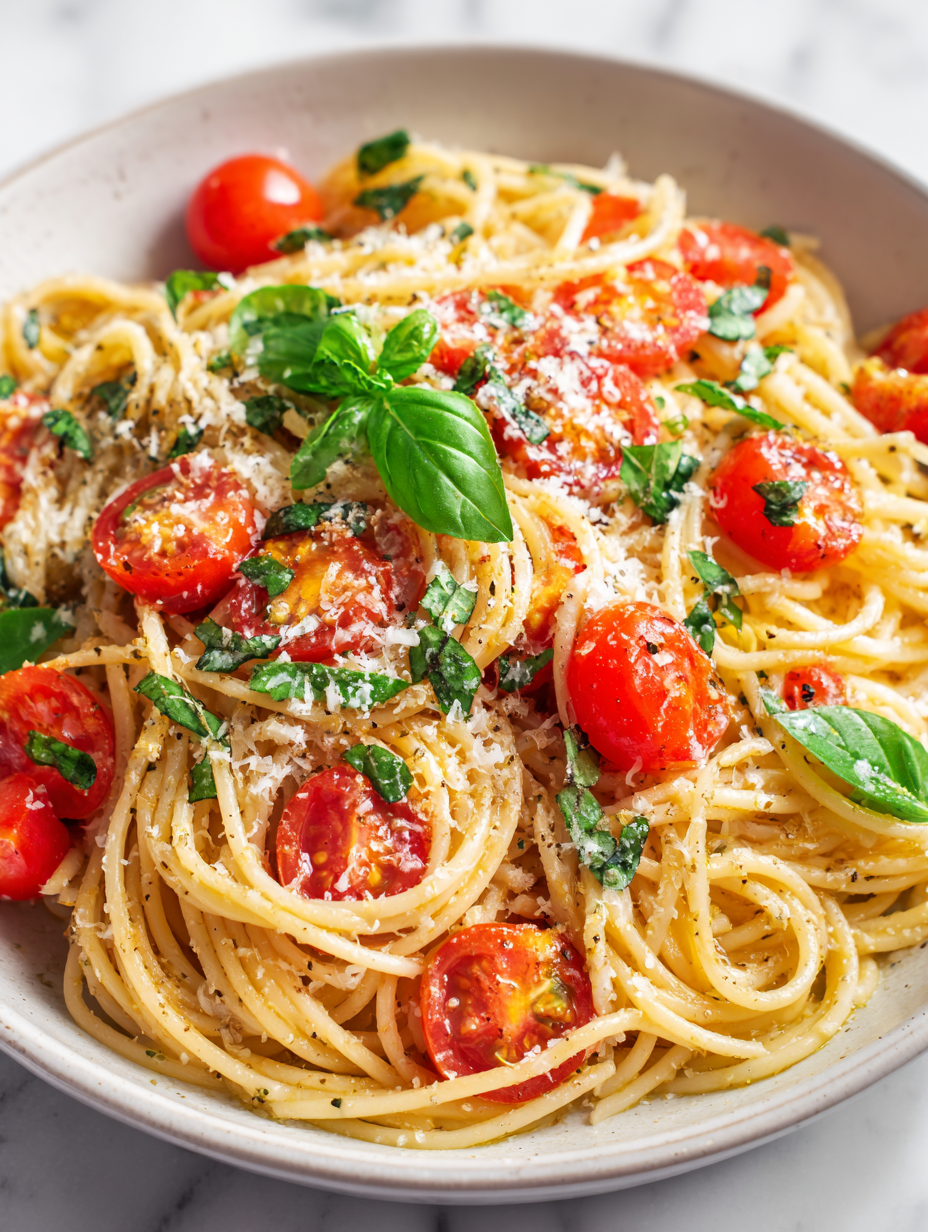
Spaghetti with Fresh Tomato and Basil
Ingredients
Equipment
Method
- Bring a large pot of salted water to a rolling boil, tasting the water to ensure it’s salty like the sea.
- Add the spaghetti to the boiling water and cook until al dente, about 8-10 minutes, stirring occasionally. The pasta should have a slight resistance when bitten.
- While the pasta cooks, heat 2 tablespoons of olive oil in a skillet over medium heat until it shimmers and gently crackles when garlic is added.
- Add the thinly sliced garlic to the skillet and sauté for about 30 seconds to 1 minute until fragrant, golden edges forming, and a sweet nutty aroma filling the air.
- Stir in the chopped fresh tomatoes or canned crushed tomatoes and cook for 5-7 minutes, stirring occasionally, until the sauce thickens slightly and the tomatoes release their juices.
- Remove the skillet from heat and tear fresh basil leaves into the sauce, adding them just before draining the pasta. The aroma should intensify, and basil will wilt slightly.
- Drain the pasta using a slotted spoon or colander, reserving about a cup of pasta water.
- Add the drained pasta to the skillet with the tomato and basil sauce. Toss gently to coat the pasta evenly, adding a splash of reserved pasta water if needed to loosen the sauce and help it cling to the noodles.
- Finish by cracking fresh black pepper over the dish and drizzling a little more olive oil for added richness. Toss again gently.
- Serve immediately, garnished with extra torn basil if desired, and enjoy the vibrant, fragrant flavors of this simple Italian classic.
Tips and tricks for perfect spaghetti
- Fresh basil: Tear basil leaves just before adding—they release maximum aroma and oil, making the dish smell vibrant.
- Olive oil: Drizzle generously and listen for that gentle crackle when garlic hits the oil, signaling perfect sautéing temperature.
- Tomatoes: Use ripe, juicy heirlooms for a sun-kissed sweetness; canned can substitute but will lack that fresh vibrancy.
- Garlic: Slice thin and sauté until fragrant, golden edges and a nutty scent mean it’s perfect—avoid overcooking to prevent bitterness.
- Pasta: Cook until al dente, about 8-10 minutes; it should have a slight resistance and hold shape without being mushy.
- Sauce consistency: Simmer tomatoes until thickened slightly and flavor concentrates—watch for a glossy, vibrant appearance.
- Tossing: Combine pasta and sauce off heat, then add basil and a final drizzle of olive oil for maximum aroma release.
Common mistakes and how to fix them
- BOILING OVER: Use a large enough pot to prevent spills during boiling.
- SOGGY PASTA: Drain immediately and toss with a little oil to stop sticking.
- UNDER-SEASONED SAUCE: Taste and adjust salt before serving for balanced flavor.
- BURNED GARLIC: Cook over medium heat, remove promptly when fragrant to avoid bitterness.
Quick fixes for common pasta mishaps
- If sauce shimmers and crackles, it’s ready—don’t rush the garlic step.
- Splash a bit of pasta water if sauce is too thick and dulls; it helps loosen.
- Patch over-salted sauce with a squeeze of lemon or a pinch of sugar to balance flavors.
- When basil browns quickly, shield it with a lid or add at the end to preserve aroma.
- DUMPED overcooked pasta? Rinse briefly in cold water, then toss with fresh basil and oil.
Prep, store, and reheat tips
- Chopped basil and minced garlic can be prepared a day in advance; store separately in airtight containers in the fridge to preserve aroma and freshness.
- The tomato sauce can be made up to 2 days ahead; cool completely, then refrigerate in an airtight jar. Reheat gently until steaming, smelling fragrant, before tossing with hot pasta.
- Cooked spaghetti can be stored in a sealed container in the fridge for up to 24 hours. To reheat, toss in hot water briefly or microwave, watching for a slight puff of steam and tender texture.
- Fresh basil’s aroma diminishes over time; add it just before serving to keep that bright, herbal scent alive. Refrigerated, it lasts 1-2 days without losing too much flavor.
- For longer storage, freeze the sauce in portions for up to 3 months. Thaw in the fridge overnight and reheat, checking for that fresh, vibrant tomato scent.
Top questions about spaghetti with tomato and basil
1. When should I add basil to preserve its aroma?
Fresh basil is best added at the end to keep its aroma bright and lively. Cooking it too long dulls the scent and flavor.
2. Can I use canned tomatoes instead of fresh ones?
Use ripe, juicy tomatoes or canned crushed tomatoes. Ripe tomatoes give a sweeter, brighter flavor, while canned are more consistent but less vibrant.
3. How do I know when the pasta is perfectly cooked?
Cook the pasta until just al dente—firm to the bite—about 8-10 minutes. Overcooked pasta turns mushy and loses texture.
4. Why should I save pasta water?
Reserve some pasta water before draining. Tossing a splash with the sauce helps it cling better and balances the flavors.
5. What kind of olive oil is best?
Use high-quality extra virgin olive oil for richness and depth. It’s the base of flavor and adds a fragrant, fruity note.
6. How do I avoid burning the garlic?
Stir in the garlic until fragrant and lightly golden—about 30 seconds to 1 minute. Overcooking makes it bitter.
7. How do I know if the sauce is seasoned right?
Adjust seasoning by tasting the sauce before combining with pasta. It should be well-salted and balanced with the sweetness of tomatoes.
8. When should I add pepper and oil?
Finish with freshly cracked black pepper and a drizzle of olive oil. These enhance aroma and flavor just before serving.
9. Can I prepare this dish ahead of time?
Serve immediately for the best aroma and texture. If needed, reheat gently with a splash of water or oil to revive the sauce.
10. How long can I store leftovers?
Yes, the sauce can be made a day ahead and stored in the fridge for up to 2 days. Reheat gently and toss with fresh basil just before serving.
This dish is a staple that reminds me how simple ingredients can shine when treated with care. The aroma of basil and ripe tomatoes still lingers in my kitchen, making each bite feel fresh and comforting. It’s a straightforward recipe, but one that feels like a small celebration of summer’s peak flavors.
Whenever I make this, I’m struck by how quickly it comes together yet feels so satisfying. It’s perfect for busy nights or lazy weekends, no fuss needed. Sometimes, the best meals are just about respecting the ingredients and giving them space to speak.