
This roast chicken with lemon and herbs is all about the balance of flavors—bright, fresh, and just a little chaotic in the best way. I love how a simple squeeze of lemon can lift the richness of the meat, making it feel lively and almost celebratory. It’s not fancy, but it’s honest, and the herbs add a whisper of earthiness that keeps it grounded.
I’ve made this dish on busy weeknights when I needed something comforting but with a punch of brightness. The lemon’s acidity cuts through the roasted fat, and the herbs turn it into something that feels fresh even after a day or two in the fridge. It’s a recipe that’s forgiving, forgiving in the way that a good roast always is, but with just enough zing to keep things interesting.
Cooking it feels like a small act of rebellion—taking something simple and turning it into a lively centerpiece. The aroma of roasting lemon and herbs filling the kitchen has a way of transforming a regular dinner into something memorable, even if you’re just feeding yourself.
Focusing on the overlooked art of balancing acidity and herbs to elevate a simple roast chicken, making it a lively centerpiece that brightens even the dullest dinner table.
Balancing acidity and herbs
- This dish reminds me of Sunday afternoons at my grandma’s house, where the air would be filled with the scent of roasting herbs and lemon zest, making everything feel cozy and nostalgic.
- I get a little thrill every time I hear that crackle when the chicken hits the hot pan—like a small celebration of simple, honest cooking.
- There’s a quiet pride in mastering that perfect lemon squeeze right before serving, balancing brightness without overpowering the tender meat.
- Sometimes, I feel a rush of relief when I see the perfectly browned skin, knowing I nailed the seasoning and timing just right.
- Cooking this makes me nostalgic for my early days in the kitchen—learning that bright herbs and sharp lemon can turn a humble roast into something lively and memorable.
The story behind this recipe
- This dish came together one hectic evening when I rummaged through my fridge and found a lonely lemon and a handful of herbs. The idea of roasting chicken with bright, fresh flavors struck me as a way to make something simple feel special without much fuss. It’s about turning everyday ingredients into a little celebration of flavor, especially when time is tight.
- I remember the first time I made it for friends—everyone was surprised how a straightforward roast could taste so lively. The lemon’s zing and the herbs’ earthiness really shine when roasted together, filling the kitchen with an aroma that’s almost addictive. It’s a reminder that good cooking often comes from improvisation and trusting what’s in your pantry.
- heading: ‘The story behind this recipe’
Historical & Cultural Tidbits
- The combination of lemon and herbs in roast chicken is a tradition that dates back centuries in Mediterranean cooking, where citrus was prized for its ability to tenderize and flavor meats.
- Lemon was once so valuable in European kitchens that it was called ‘the poor man’s gold,’ used to brighten dishes and preserve freshness before refrigeration.
- Herbs like thyme and rosemary have been used since Ancient Greece and Rome, not only for flavor but also for their believed medicinal properties and warding off illness.
- Roast chicken with lemon and herbs became a staple in French cuisine, especially in Provençal dishes, where local herbs and citrus flourish in the warm Mediterranean climate.
Ingredient breakdown: key components
- Chicken: I prefer a whole bird for even cooking and flavor. If you only have parts, adjust your cooking time and check for doneness.
- Lemon: Bright, zesty, and fresh—use organic if possible. For a milder tang, substitute lime or add a splash of orange juice.
- Herbs: Fresh thyme and rosemary are my go-tos—they add earthiness. Dried herbs work in a pinch, but use half the amount and crush them first.
- Garlic: Adds depth and aroma—pressed or minced. If you dislike raw garlic, roast a clove alongside the chicken for mellow sweetness.
- Olive Oil: I love extra virgin for flavor—use it generously. For a lighter feel, swap with avocado oil, which has a milder taste.
- Salt & Pepper: Essential for seasoning—don’t skimp. Consider adding a pinch of smoked paprika for a subtle smoky note.
- Optional additions: A splash of white wine or chicken broth can keep things moist and add complexity during roasting.
Spotlight on key ingredients
Lemon:
- I love how lemon’s zesty brightness transforms roasted chicken into something lively. The acidity is sharp, almost juicy when roasted, and if you skip it, the dish feels dull. Use organic if possible—peel and zest for maximum flavor.
- Herbs: Fresh thyme and rosemary bring an earthy, pine-like aroma that intensifies as they roast. They can turn slightly crispy and fragrant, adding texture and aroma. Dried herbs work in a pinch, but they won’t deliver the same punch or freshness.
Herbs:
- I prefer fresh herbs for their vibrant aroma and tender leaves, but dried herbs can stand in if you crush them well. Fresh herbs turn darker and more fragrant as they roast, filling the kitchen with an herbal perfume. They can also crisp up, adding a slight crunch.
- Garlic: Raw garlic adds a deep, pungent aroma that mellows and sweetens when roasted. It becomes soft, almost buttery, and infuses the meat with a mellow, caramelized flavor. If you dislike raw garlic’s bite, roasting whole cloves alongside the chicken works beautifully.
Notes for ingredient swaps
- Fresh Herbs: If you don’t have thyme or rosemary, use a mix of oregano and sage for a similar earthy aroma. Dried herbs work too—use half the amount and crush them first for more flavor.
- Lemon: Swap with lime for a slightly different citrus punch, or orange zest for sweeter brightness. If lemon isn’t available, a splash of white wine vinegar can add acidity.
- Olive Oil: Extra virgin oil adds richness, but avocado oil offers a milder, buttery flavor with a high smoke point. For a nutty twist, try walnut oil sparingly.
- Garlic: If fresh isn’t on hand, use garlic powder—half the amount. Roasting whole garlic cloves alongside the bird gives a mellow, caramelized sweetness.
- Salt & Pepper: Kosher salt provides a cleaner flavor, but sea salt flakes add texture. For heat, sprinkle with a pinch of smoked paprika or red pepper flakes.
- Stuffing Citrus: If lemon isn’t available, use lime or a small orange for a different aromatic note. Or skip altogether if you prefer a cleaner herb profile.
- Herb Mix: Fresh herbs are best, but dried herbs can stand in. Just remember to crush and use half as much, and consider adding a little fresh zest for vibrancy.
Equipment & Tools
- Roasting pan or ovenproof skillet: Holds the chicken during roasting, allows even heat distribution.
- Sharp knife or kitchen shears: For trimming, stuffing, and prepping the chicken.
- Meat thermometer: To check internal temperature for doneness.
- Basting brush or spoon: To baste the chicken with pan juices during cooking.
- Tongs: To handle the hot chicken and herbs safely.
Step-by-step Roast Chicken Guide
- Preheat your oven to 220°C (425°F). Grab a roasting pan or a sturdy ovenproof skillet—something wide enough to hold the chicken comfortably. Pat the chicken dry with paper towels; dry skin crisps better and browns evenly. Salt the chicken generously all over, including inside the cavity, and let it sit while you prepare the herbs and lemon.
- Prepare your herb mixture: finely chop a handful of fresh thyme and rosemary. Zest one lemon and mix the zest with the herbs. Mince 3 cloves of garlic. In a small bowl, combine the herbs, lemon zest, garlic, 2 tbsp olive oil, and a pinch of salt and pepper. Rub this mixture all over the chicken, making sure to get under the skin where possible.
- Stuff the cavity with half a lemon (sliced thin) and some extra sprigs of thyme and rosemary if you like. Place the chicken breast-side up in your prepared pan. Tuck the wing tips under for even cooking and a tidy look.
- Roast the chicken in the preheated oven. For a 1.5 kg (3.3 lb) bird, roast for 20 minutes at 220°C (425°F), then reduce temperature to 180°C (355°F) and roast for another 40-50 minutes. Baste once or twice with pan juices after 20 minutes. The skin should turn a deep golden brown, and the house will fill with a fragrant lemon-herb aroma.
- Check for doneness: insert a meat thermometer into the thickest part of the thigh—aim for 75°C (165°F). The juices should run clear when pierced. The skin should be crisp and visibly browned, and the meat should feel firm but not rubbery when pressed gently.
- Remove from oven and let rest for at least 10 minutes. Resting allows the juices to redistribute, keeping the meat tender and juicy. Transfer to a serving platter, squeeze fresh lemon juice over, and garnish with extra herbs if desired.
Let the chicken rest, tented loosely with foil, for at least 10 minutes. Carve and serve with pan drippings or a squeeze of fresh lemon. Garnish with extra herbs for color and aroma.
How to Know It’s Done
- Thermometer reads 75°C (165°F) in the thigh.
- Skin is deep golden and crisp.
- Juices run clear when pierced with a skewer.
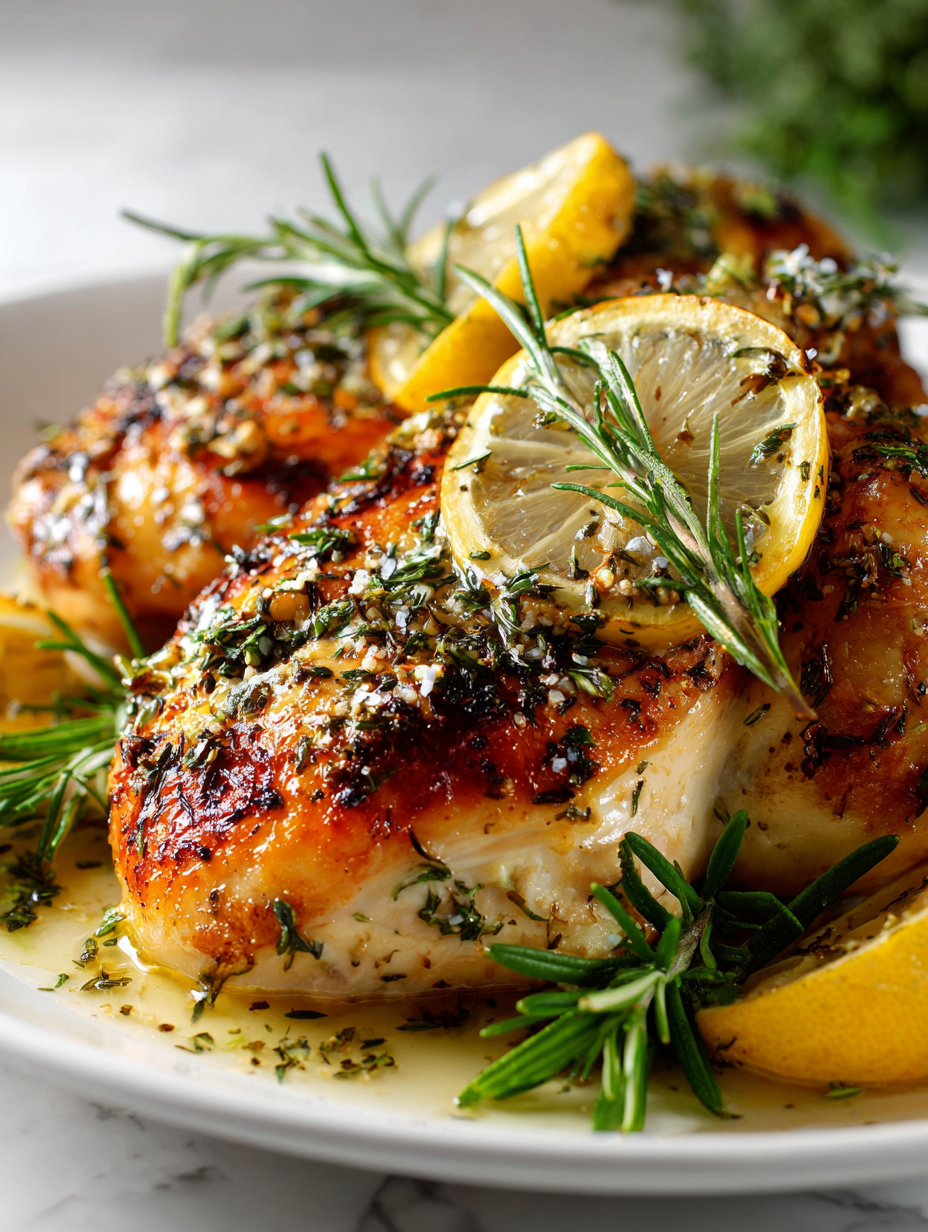
Lemon Herb Roast Chicken
Ingredients
Equipment
Method
- Preheat your oven to 220°C (425°F). Pat the chicken dry with paper towels to ensure crispy skin. Season generously with salt and pepper all over, including inside the cavity.
- Zest the lemon, then halve it. Mix the lemon zest with the minced garlic, olive oil, and chopped herbs to create a fragrant herb mixture.
- Gently loosen the skin of the chicken with your fingers or a spoon, then rub the herb mixture under the skin and all over the surface of the chicken for maximum flavor.
- Squeeze half of the lemon into the cavity of the chicken, then stuff the halves along with sprigs of thyme and rosemary inside. Tuck the wing tips under the body for even roasting.
- Place the chicken in a roasting pan or ovenproof skillet, breast-side up. Roast at 220°C (425°F) for 20 minutes to crisp the skin, then reduce oven temperature to 180°C (355°F) and continue roasting for 40-50 minutes, basting once or twice with pan juices.
- Insert a meat thermometer into the thickest part of the thigh to check for doneness—aim for 75°C (165°F). The skin should be deep golden and crispy, and the juices should run clear.
- Remove the chicken from the oven, tent loosely with foil, and let it rest for at least 10 minutes to allow juices to redistribute.
- Squeeze the remaining fresh lemon over the chicken for a bright finish. Garnish with extra herbs if desired, then carve and serve.
Pro tips for perfect roast chicken
- Use a high heat at the start to get crispy skin, then lower to finish cooking through.
- Pat the chicken dry thoroughly before seasoning; moisture steams skin, preventing crispness.
- Rub herbs under the skin for more flavor infusion and a fragrant crust.
- Baste the chicken halfway through roasting for extra juiciness and a shiny, crisp skin.
- Rest the chicken uncovered for at least 10 minutes to allow juices to redistribute.
- Use a meat thermometer to ensure the thickest part hits 75°C (165°F), avoiding overcooking.
- Squeeze fresh lemon over the chicken just before serving for a lively citrus punch.
Common mistakes and how to fix them
- TOO MUCH SALT: Relying on salt alone can overpower; use herbs or citrus to balance flavor.
- UNDER-ROASTED: Chicken looks cooked but remains pink; always check internal temp or juices.
- OVER-TORCHED SKIN: Burnt skin tastes bitter; reduce heat or cover loosely if browning too fast.
- MISSED RESTING: Cutting into hot chicken causes juices to run out; let it rest at least 10 minutes.
Quick fixes and pantry swaps
- When chicken skin burns, splash with a little lemon juice to shimmer and mask the char.
- If juices run pink, rescue with a quick 5-minute oven blast at 200°C (390°F).
- Dumped too much salt? Rinse lightly and pat dry before roasting again.
- Over-torched skin? Cover loosely with foil and lower oven temperature immediately.
- Shield a smoky aroma with a spritz of fresh lemon—brighten and freshen the kitchen air.
Prep, store, and reheat tips
- You can prep the herb lemon rub up to a day in advance; keep covered in the fridge for more intensity. The flavors meld and deepen overnight.
- Roasted chicken keeps well in the fridge for up to 3 days; store in an airtight container and reheat gently to preserve moisture.
- Reheating the chicken in a warm oven or covered microwave prevents it from drying out; aim for a gentle heat that keeps the skin crispy if possible.
- For longer storage, freeze cooked chicken for up to 2 months. Thaw in the fridge overnight, then reheat as above, noting that flavors may soften slightly over time.
- The lemon-herb aroma becomes more subtle after refrigeration, but the bright flavors still shine through when reheated. Expect a slightly softer skin and more concentrated herb scent.
Top questions about roast chicken
1. How do I know when the chicken is fully cooked?
Use a meat thermometer to check the thickest part of the thigh; it should read 75°C (165°F).
2. Why should I rest the chicken before carving?
Let the chicken rest for at least 10 minutes after roasting; this helps juices redistribute and keeps it moist.
3. Can I use dried herbs instead of fresh?
Yes, you can substitute dried herbs, but use half the amount and crush them first for better flavor.
4. How can I keep the chicken moist during roasting?
Add a splash of white wine or chicken broth to the pan during roasting to keep the meat moist and add flavor.
5. Should I use organic lemons for this recipe?
Use organic lemon for a brighter, more intense citrus flavor; zest the lemon first for extra zestiness.
6. What if the chicken skin burns before it’s cooked?
If the skin is burning too quickly, loosely cover the chicken with foil and lower the oven temperature.
7. Why do I start with a high oven temperature?
Roast the chicken at high heat initially to crisp the skin, then lower the temperature to finish cooking.
8. Can I make the seasoning mixture in advance?
You can prepare the herb and lemon rub a day ahead; keep it covered in the fridge for more flavor.
9. How do I reheat leftover roast chicken?
Reheat the chicken gently in the oven or microwave, covered, to prevent it from drying out.
10. What if the chicken looks cooked but isn’t fully done?
If the juices run pink, return the chicken to the oven for a few more minutes or check the internal temperature again.
This roast chicken with lemon and herbs is a reminder that simple ingredients, when balanced just right, can create something truly satisfying. The bright citrus and fragrant herbs make it feel fresh, even after a few days in the fridge. It’s a dish that’s honest, unpretentious, and perfect for whenever you need something reliable and flavorful.
Cooking it reminds me that good flavor often comes from a few well-chosen elements working together. Whether it’s a quick weeknight dinner or a relaxed weekend meal, this roast brings a little brightness to the table and a sense of quiet achievement. It’s a recipe I keep coming back to, not just for the taste but for the comfort of knowing I can pull it off effortlessly.