
This crockpot vegetable stew is my answer to busy nights when I still want something warm, nourishing, and full of flavor. It’s like a hug in a bowl, especially when seasonal produce is at its peak and I want to celebrate that. The slow cooker does all the work, so I can focus on chopping and tossing ingredients, knowing the flavors will meld into something comforting.
What I love about this stew is how it turns simple vegetables into a hearty, satisfying meal without fuss. It’s perfect for making ahead or throwing together in a pinch. Plus, the aroma filling the house—sweet carrots, smoky tomatoes, and fragrant herbs—reminds me that good food can be effortless and restorative, even on the busiest days.
Focusing on how this slow-cooked veggie stew becomes a comforting, effortless way to connect with seasonal produce, turning busy weeknights into moments of nourishment and nostalgia.
The story behind this recipe
This stew is born from my frustration with how quickly vegetables can lose their charm if not cooked just right. I wanted a method that could bring out their sweetness and depth without constant attention, especially on busy days. The slow cooker seemed perfect—set it and forget it, but with flavor that feels like it’s been simmering all afternoon. Over the years, I’ve tweaked it to make sure each vegetable still retains a bit of its personality, even after hours of gentle cooking.
Key ingredients and tips
- Carrots: I prefer using organic, firm carrots for a sweet, earthy aroma that infuses the stew; don’t skimp on their freshness.
- Tomatoes: Canned diced tomatoes add a smoky richness—if yours taste flat, a splash of smoked paprika can boost that depth.
- Potatoes: Russets break down a bit, creating a velvety texture, but if you want more bite, Yukon Golds hold their shape better.
- Onions: I like a generous handful of chopped onions for sweetness—if you’re out, leeks work well and add a mild, garlicky note.
- Vegetable broth: Use a good-quality store-bought broth or homemade—just be careful with added salt, or it can overpower the dish’s natural sweetness.
- Herbs: Fresh thyme and parsley brighten the stew—dried work in a pinch, but add them early to extract maximum flavor.
- Olive oil: Drizzle a bit of good-quality olive oil before serving for a fruity aroma and a hint of richness—skip if vegan, but then maybe a splash of balsamic.
Spotlight on key ingredients
Carrots:
- I prefer using organic, firm carrots for a sweet, earthy aroma that infuses the stew; don’t skimp on their freshness.
- Tomatoes: Canned diced tomatoes add a smoky richness—if yours taste flat, a splash of smoked paprika can boost that depth.
- Potatoes: Russets break down a bit, creating a velvety texture, but if you want more bite, Yukon Golds hold their shape better.
Tomatoes and Herbs:
- Tomatoes: I love the oozy, slightly smoky flavor they develop during slow cooking—if you’re using fresh, opt for ripe, juicy ones.
- Herbs: Fresh thyme and parsley brighten the stew with fragrant, lively notes; dried herbs work but lose some vibrancy during long cook times.
Notes for ingredient swaps
- Dairy-Free: Swap butter for coconut oil to add a subtle sweetness and richness, without the dairy tang.
- Low-Sodium: Use homemade or low-sodium broth to control salt levels and let the vegetable flavors shine.
- Root Vegetables: Turnip or parsnips can replace carrots for a slightly sweeter, earthier twist.
- Herbs: Fresh basil or rosemary can stand in for thyme and parsley, adding different aromatic layers.
- Tomatoes: Roasted red peppers blended in can give a smoky, sweet depth if canned tomatoes aren’t available.
- Oil: Avocado oil offers a mild, buttery flavor and a higher smoke point for sautéing aromatics early on.
- Thickener: Pureed cooked beans or a splash of coconut milk can add creaminess if you want a richer stew.
Equipment & Tools
- Crockpot: Main cooking vessel, slow-cooks the stew evenly over hours.
- Chef’s knife: Chops vegetables into uniform pieces for even cooking.
- Cutting board: Provides a stable surface for chopping and prep.
- Wooden spoon: Stirs ingredients without damaging the crockpot’s surface.
- Measuring spoons: Ensures accurate seasoning and herb measurements.
Step-by-step guide to vegetable stew
- Gather all your ingredients: carrots, potatoes, celery, canned tomatoes, onion, garlic, vegetable broth, thyme, parsley, olive oil, salt, and pepper. Chop vegetables into bite-sized pieces, about 1-inch cubes for root vegetables and smaller for softer ones.
- Add the chopped carrots, potatoes, celery, and onion into the crockpot. Pour in the canned tomatoes and vegetable broth. Stir in minced garlic, thyme, salt, and pepper. Drizzle with olive oil to enhance richness.
- Set the crockpot on low heat. Cover with lid and cook for 6-8 hours. After the first 4 hours, give it a gentle stir to ensure even cooking. The veggies should be tender and fragrant by the end of cooking.
- Check for doneness: vegetables should be soft but not mushy, and the stew should have a rich, melded aroma. If it’s too thick, add a splash of broth and stir. If it’s too thin, uncover and cook on high for 30 minutes to reduce slightly.
- Taste and adjust seasoning: add more salt or pepper if needed. Stir in chopped fresh parsley just before serving for a bright, herbal note.
- Rest the stew for about 10 minutes off heat. This helps flavors settle and makes serving easier. Ladle into bowls, garnish with extra parsley if desired.
- Serve hot, with crusty bread or a side salad. Enjoy the comforting, smoky aroma and the hearty, velvety texture of this stew.
Let the stew sit off heat for 10 minutes. Garnish with fresh parsley. Serve directly from the crockpot or ladle into bowls. Pair with crusty bread for a complete meal.
How to Know It’s Done
- Vegetables are tender and easily pierced with a fork.
- Aromatic smell of herbs and cooked vegetables fills the kitchen.
- Stew has thickened slightly and looks rich and inviting.
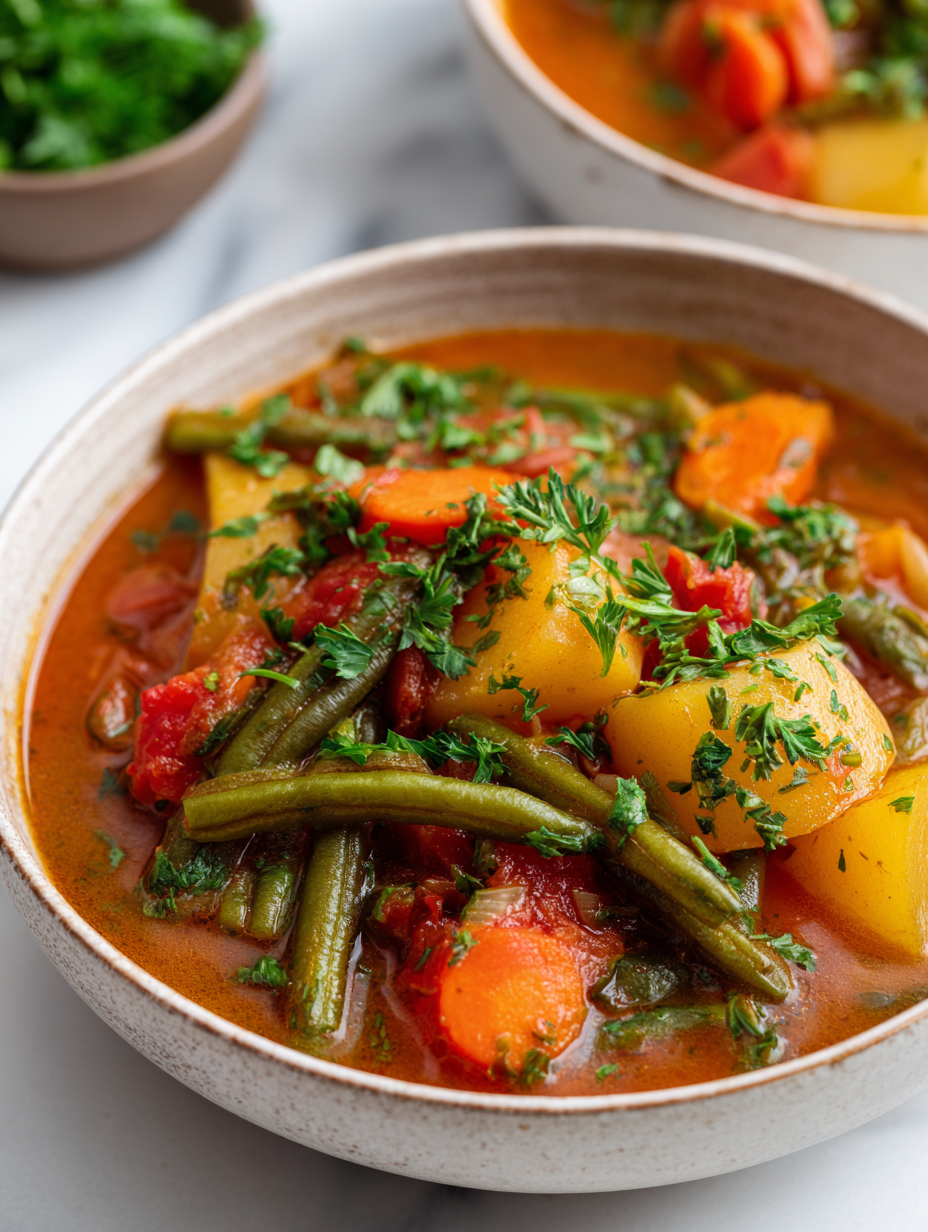
Slow Cooker Vegetable Stew
Ingredients
Equipment
Method
- Start by chopping the carrots, potatoes, celery, and onion into roughly 1-inch pieces to ensure even cooking and a rustic look.
- Add the chopped carrots, potatoes, celery, and onion into the crockpot. Pour in the diced tomatoes with their juice and the vegetable broth, then stir in the minced garlic and dried thyme.
- Drizzle the olive oil over the ingredients, then season with salt and pepper to taste. Give everything a gentle stir to combine the flavors evenly.
- Cover the crockpot with its lid, set to low heat, and cook for 6 to 8 hours. During the first 4 hours, you can check and give it a gentle stir to prevent sticking and to help flavors meld.
- Once the vegetables are tender and the stew smells fragrant with a rich tomato and herb aroma, uncover and give it a gentle stir. If it’s too thick, add a splash of broth; if too thin, cook uncovered on high for 30 minutes to thicken.
- Taste the stew and adjust seasoning with additional salt, pepper, or herbs if needed. Stir in chopped fresh parsley for a bright, herbal note.
- Let the stew rest off the heat for about 10 minutes to settle the flavors. Then, ladle into bowls and serve hot, garnished with extra parsley if desired.
Pro tips for vegetable stew
- Sear aromatics first → Releases deep, fragrant oils that boost stew flavor.
- Layer vegetables in order of cooking time → Hardest first, softer last, for even tenderness.
- Use a splash of vinegar or lemon at the end → Brightens flavors and balances the richness.
- Keep the lid slightly ajar during the last hour → Helps excess moisture evaporate for a richer stew.
- Stir gently halfway through → Prevents sticking and helps flavors meld evenly.
- Taste and adjust seasoning post-cooking → Stews often need a pinch more salt or herbs after slow simmering.
Common mistakes and how to fix them
- FORGOT to check vegetable tenderness → Test with a fork at 6 hours.
- DUMPED too much broth → Add extra vegetables or simmer uncovered to thicken.
- OVER-TORCHED at high heat → Reduce heat immediately and stir to prevent burning.
- SKIPPED seasoning adjustments → Taste and adjust salt/herbs before serving.
Quick fixes and pantry swaps
- When stew looks watery, splash in a little tomato paste for richness and shimmer.
- If vegetables are undercooked, increase heat slightly and cook uncovered for 10 minutes.
- DUMPED too much salt? Add a peeled potato to absorb excess seasoning, then remove.
- Splash some lemon juice or vinegar to brighten dull flavors if the stew tastes flat.
- PATCH a burnt base by carefully removing the top layer and adding fresh broth, then simmer gently.
Prep, store, and reheat tips
- Chop all vegetables the night before; keep them in an airtight container in the fridge for up to 24 hours, their fresh aroma preserved.
- The stew tastes even better the next day; store leftovers in a sealed container for up to 3 days, the flavors mellow and deepen.
- Reheat gently on the stove or in the microwave, aiming for a simmer that restores warmth without losing the stew’s velvety texture. Expect aroma of herbs and cooked vegetables to rekindle.
- For longer storage, freeze in portions for up to 3 months. Thaw overnight in the fridge, then reheat slowly, watching for bubbling and a fragrant, inviting smell.
Top questions about vegetable stew
1. What vegetables work best in this stew?
Use a mix of hearty vegetables like carrots, potatoes, and celery. They release comforting aromas and hold up well during slow cooking.
2. Can I make this stew protein-rich?
Yes, you can add beans or lentils for extra protein. Just pre-cook them if using dried, or use canned for convenience.
3. When should I add seasoning?
Adjust the seasoning at the end—taste for salt, herbs, and acidity. A splash of vinegar or lemon brightens the dish.
4. How long does it take to cook?
Cook on low for 6-8 hours. The vegetables should be tender and the flavors deeply melded, smelling sweet and smoky.
5. Should I use fresh or dried herbs?
Use fresh herbs like parsley or thyme for vibrant flavor. Dried herbs work but may need a longer cooking time to release aroma.
6. How long can I store leftovers?
Yes, store leftovers in an airtight container in the fridge for up to 3 days. Reheat gently, watching for bubbling and aroma revival.
7. Can I freeze this stew?
Yes, freeze in individual portions for up to 3 months. Thaw overnight in the fridge and reheat on the stove for best flavor.
8. How do I fix a watery stew?
If the stew is too watery, stir in a spoonful of tomato paste or cook uncovered for a few minutes to thicken.
9. What if vegetables overcook?
When vegetables are mushy or overcooked, reduce the heat immediately and stir in fresh herbs or a splash of vinegar to refresh flavors.
10. Any tips for chopping vegetables?
Use a sharp chef’s knife for clean cuts, and chop vegetables into uniform pieces to ensure even cooking.
This vegetable stew isn’t just about filling bellies; it’s about the slow, intentional process of turning simple ingredients into something warm and familiar. The aroma of simmering herbs and soft vegetables feels like a quiet celebration of the season’s best produce. It’s the kind of dish that makes the house smell like comfort, no matter how hectic the day was.
In the end, what matters most is how this stew makes you feel—nourished, grounded, maybe even a little proud of how effortlessly it comes together. It’s a reminder that good, honest food can be simple but still deeply satisfying, especially when it’s cooked with care and patience.